Structural safety checks
Charring, sagging ceilings, and heat-damaged trusses or joists can create collapse risk. A safe entry plan comes before any cleanup.
Serving Atlanta, Georgia & surrounding areas
24/7 Emergency Response
One call instead of ten No web forms, no callback spam 24/7 Emergency Response
If you have just had a fire, your next choices affect safety, insurance, and how much of the home can be saved. Use this practical checklist to stabilize the property and get a clear restoration plan without missing steps.
✓ Skip the 3-hour Google rabbit hole — we’ve already done the vetting
✓ One conversation, not ten voicemails and seven web forms
✓ 24/7 emergency response — talk to a real person who actually knows Atlanta Restoration
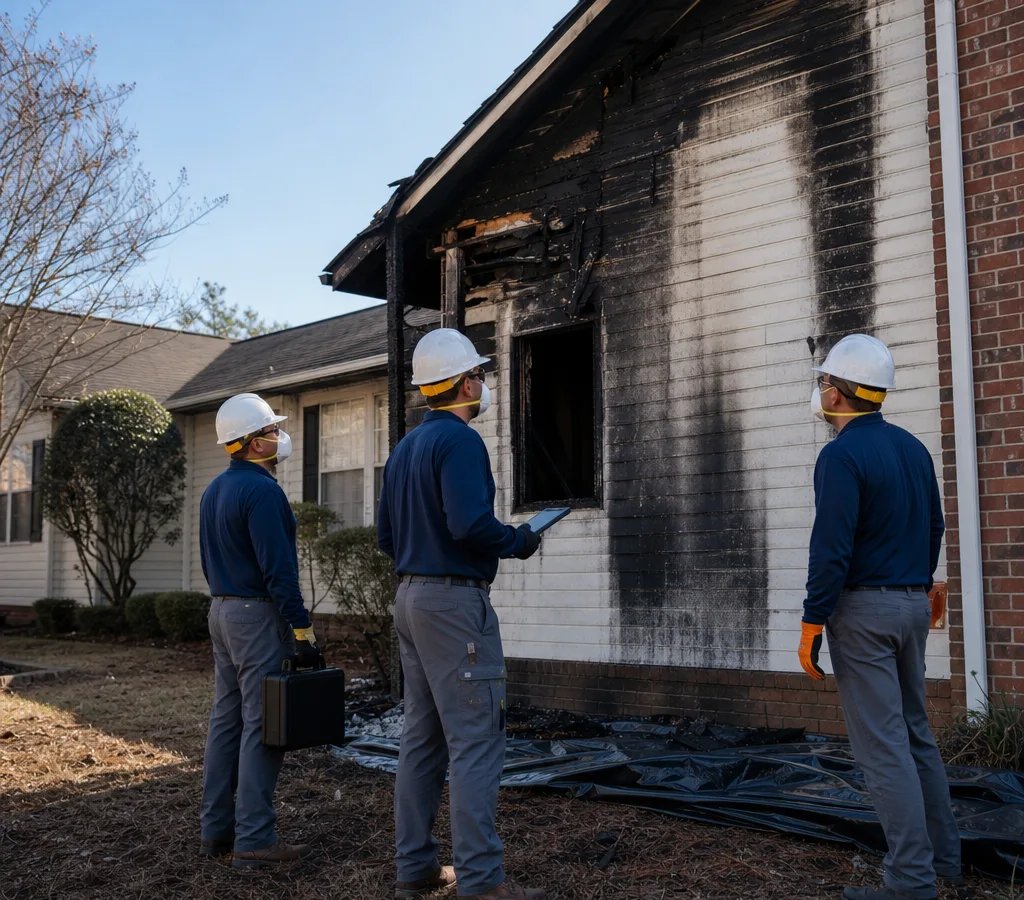
If you are searching what should I do after a house fire in Atlanta, GA, start with one rule: do not re-enter until the fire department says it is safe. After the flames are out, hazards often remain, including weakened framing, falling drywall, lingering heat in hidden voids, and smoke that can irritate lungs.
Immediate steps to take in the first hour:
What not to do: do not run the HVAC, do not turn on lights in fire-affected areas, do not try to wipe soot off walls, and do not throw away damaged items until you document them.
Good documentation speeds up your claim and prevents disagreements later. Start with photos and video before cleanup begins.
A simple documentation checklist:
Atlanta homes can range from older plaster and lath interiors to newer drywall assemblies, and the materials affect how soot bonds and odor migrates. A written scope based on an on-site inspection helps establish what can be cleaned, what must be removed, and what needs specialty treatment.
Fire Damage Restoration Atlanta can inspect the damage, document conditions, and outline a clear path forward. Many homeowners begin by understanding the overall fire damage restoration process and what a professional response typically includes.
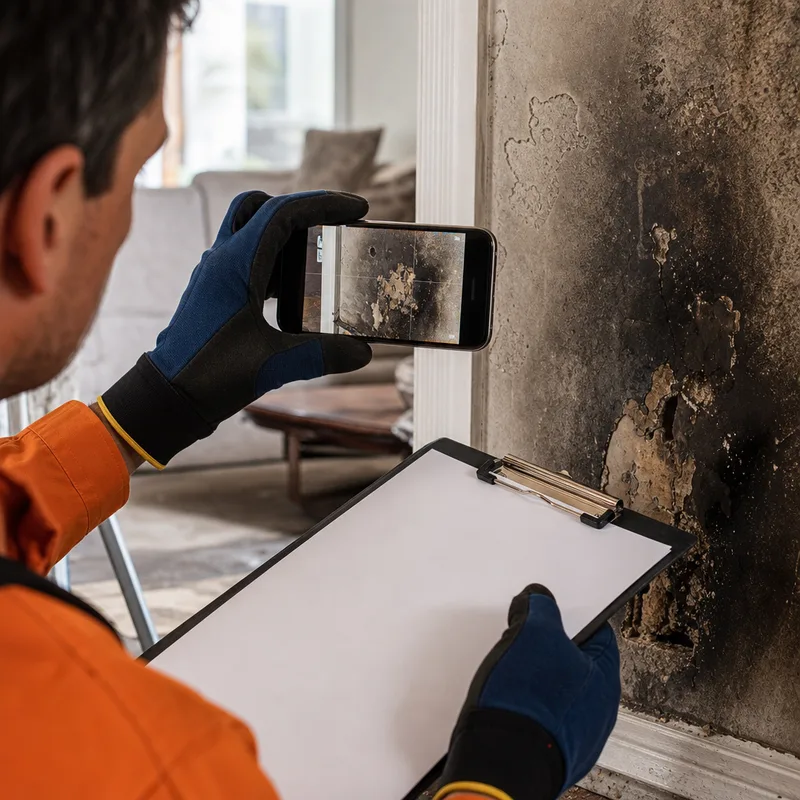
Charring, sagging ceilings, and heat-damaged trusses or joists can create collapse risk. A safe entry plan comes before any cleanup.
Firefighting water plus Atlanta humidity can drive swelling, mold growth, and odor lock-in. Fast drying and dehumidification protect what can be saved.
Dry soot, oily soot, and protein residue behave differently. Cleaning methods vary for drywall, brick, hardwood, upholstery, and porous contents.
Odor control often requires source removal and treatment such as thermal fogging or hydroxyl or ozone where appropriate, not just air fresheners.
Soot is conductive and corrosive. Sensitive equipment may need specialty cleaning and testing before being powered on again.
When the home is not livable, controlled packing, labeling, and off-site cleaning and storage can reduce loss and keep the claim organized.
Wait for the fire department's approval before entering. Once cleared, board up broken windows and doors and cover roof openings as needed to reduce theft and weather damage.
Ask what documentation they need immediately and whether they have requirements for emergency mitigation. Write down your claim number and the adjuster's contact details.
A qualified restoration team can assess soot type, water saturation, and what materials are salvageable. The scope should detail demolition, cleaning methods, drying targets, odor treatment, and rebuild boundaries.
Water extraction, drying, and controlled removal of charred or heavily contaminated materials help prevent secondary damage, especially in humid Atlanta conditions.
Expect a mix of HEPA vacuuming, dry chemical sponges for loose soot, wet cleaning where appropriate, and odor treatment after source removal. Skipping source removal often means the smell returns.
Once cleaning and drying goals are met, repairs address drywall, paint, flooring, trim, and affected mechanical systems. Finish with a walkthrough to confirm livability and remaining punch-list items.
Two local factors commonly affect how fast a home can be stabilized after a fire in Atlanta:
Warm, damp air can push moisture deeper into porous materials after suppression efforts. Dehumidification and airflow planning are often urgent because wet soot can permanently stain and accelerate corrosion on metal fixtures and appliances.
In denser neighborhoods and condo corridors, staging equipment, placing dehumidifiers, and moving contents can take longer. Midtown, Buckhead, Old Fourth Ward, and East Atlanta each present different parking, building, contents, and shared-wall considerations.
A good restoration plan accounts for these constraints upfront, including where equipment will run, how debris will be removed, and which areas can be safely isolated to prevent soot from spreading into clean rooms.
📞 Atlanta • 24/7 ResponseIf your home is not safe to occupy, a same-day inspection can turn uncertainty into a written plan: what gets removed, cleaned, dried, and handled next.
Call Now · (470) 762-7011Sometimes, but only after the structure is cleared and the air quality and utilities are safe. Smoke can migrate through HVAC returns, attic spaces, and wall cavities, and firefighting water can create hidden moisture that makes living conditions unhealthy even when damage looks limited.
Wait unless you are doing only light, non-porous surface dusting in an area confirmed safe. Wiping soot on painted drywall or porous materials can permanently smear it, and using the wrong cleaner can set stains and make odor harder to remove.
Give a clear timeline, the rooms affected, and what emergency steps have been taken to secure the property and prevent further damage. Share photos and a basic contents list by room, and ask what documentation they need before any demolition or disposal occurs.
It depends on how much heat, smoke, and water damage occurred, plus whether rebuilding is needed. A small, contained incident might be stabilized and cleaned in days, while projects involving structural repair and extensive contents processing can take weeks or longer once scopes and materials are coordinated.
Odor can persist even with minimal visible soot because smoke particles embed into insulation, carpeting, upholstery, and HVAC components. The fix usually involves identifying and removing the odor source, then treating remaining surfaces and air pathways rather than masking the smell.
They may be, especially if there is electrical damage, suspected gas line trouble, or water intrusion into panels or outlets. Treat every utility system as unsafe until it is inspected; turning power back on too early can cause additional damage or a second event.
A brief description of what burned, when it happened, whether water was used to extinguish it, and whether you have visible roof or window openings helps set the right response. Photos are helpful, but an on-site inspection is what confirms scope and safety conditions.
Tell Fire Damage Restoration Atlanta what happened and what areas are affected, and we will help you stabilize the property, document conditions, and map out a realistic restoration plan that fits your claim and your timeline.