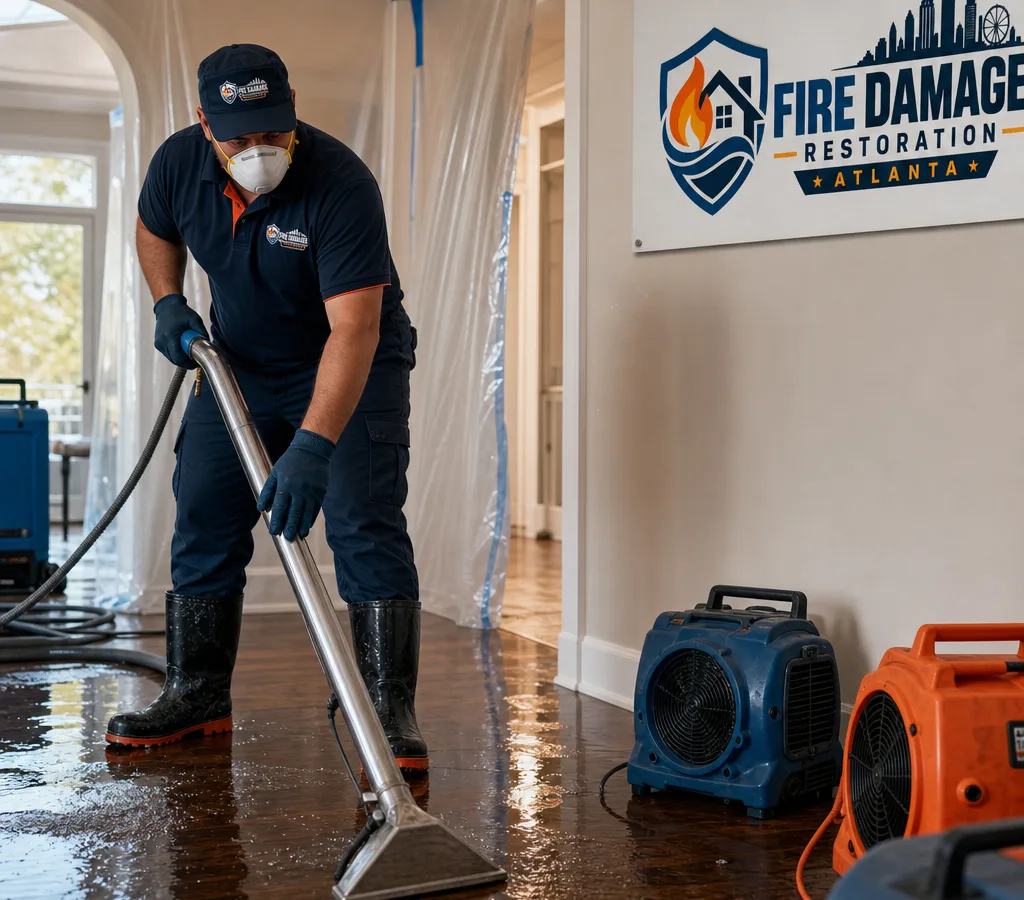
Water extraction and controlled removal
We remove standing water with commercial extraction equipment, then evaluate what materials can be dried in place versus what must be removed to expose trapped moisture.
Serving Atlanta, Georgia & surrounding areas
24/7 Emergency Response
Stop the spread fast with professional extraction, structural drying, and moisture control designed to protect floors, walls, and indoor air after a leak or flood.
Water damage gets worse by the hour. Drywall wicks moisture, wood swells, insulation holds water, and humidity can push dampness into adjacent rooms. Our team at Fire Damage Restoration Atlanta provides water damage mitigation Atlanta property owners rely on when they need rapid cleanup, drying, and a clear plan to prevent secondary damage.
Mitigation is the “right now” phase. The goal is to remove water, control humidity, and dry the structure to appropriate targets, then document what happened so the next steps—repairs, flooring replacement, cabinet work, and painting—are straightforward. Whether your issue started with a supply line leak, an overflowing fixture, a roof intrusion during a storm, or a basement or garage seepage event, we focus on stabilizing the building and keeping the damage from spreading.
Atlanta conditions matter. Warm weather and high humidity can slow evaporation if the space is not dehumidified correctly, and older housing stock around intown neighborhoods can hide water in plaster, lath, or layered flooring assemblies. Proper mitigation is not just running a few fans. It is moisture mapping, controlled drying, and checking the results.
We remove standing water with commercial extraction equipment, then evaluate what materials can be dried in place versus what must be removed to expose trapped moisture.
We use moisture meters and thermal imaging to locate wet areas behind finishes, set drying goals, and record readings so progress is measurable.
Air movers, dehumidifiers, and targeted airflow are set based on the layout and materials so moisture is driven out of the structure, not into the next room.
When conditions call for it, we isolate affected areas to limit dust and cross-contamination, and we address slip hazards and electrical concerns before drying begins.
If water contacted contaminants or sat long enough to create odor, we use appropriate cleaning methods and treatments based on the category of water and affected surfaces.
Once the structure is dry, we outline what needs to be rebuilt and what can remain, so you can make decisions with fewer surprises.
If you have active water intrusion, your first decisions can limit the total damage.
Then get a mitigation team on site quickly. A fast response is important in Atlanta because high ambient humidity can keep materials damp if the space is not dehumidified aggressively and monitored. In homes with hardwood, engineered wood, or layered subfloors, water can migrate under the finished surface and cause cupping or separation if drying is delayed.
If the event overlaps with fire-related damage at your property, it is usually best to coordinate the sequence of cleanup so soot and water issues do not conflict. Fire damage restoration work can be coordinated alongside mitigation when needed.
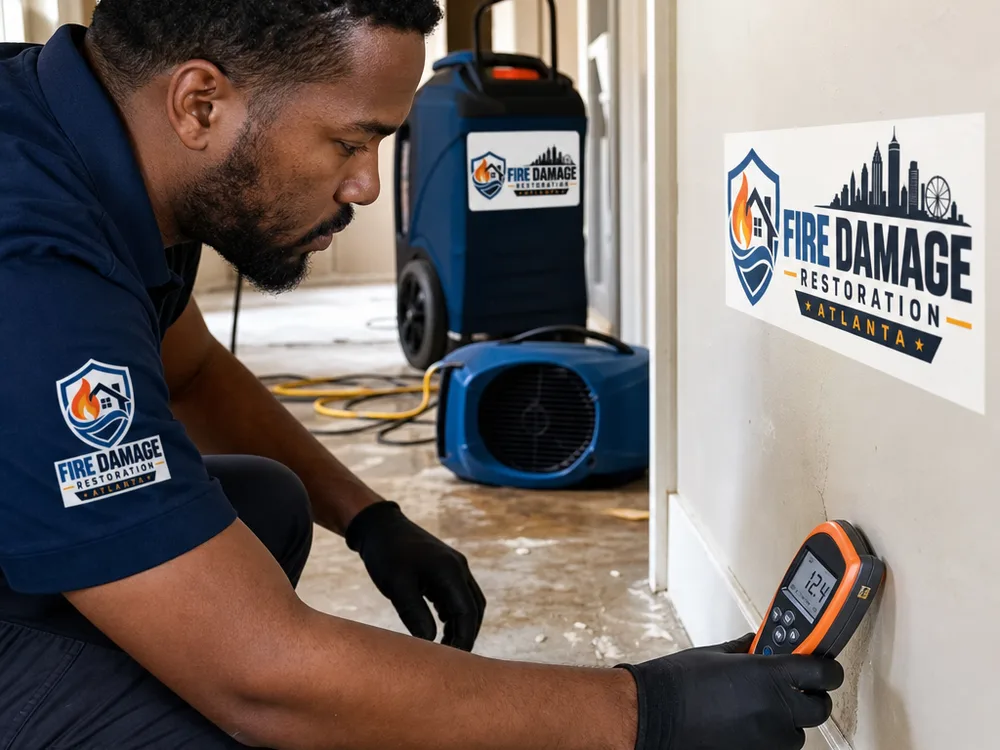
We identify the source and affected materials, check for hidden moisture, and address immediate safety concerns such as slip hazards, wet electrical areas, and unstable ceilings.
We remove standing water and determine what must be opened to dry correctly, such as removing a small section of wet drywall or pulling baseboards for airflow behind walls.
We place air movers and dehumidifiers based on the layout and materials involved, and add containment when dust control or hygiene conditions require it.
Drying is not “set it and forget it.” We re-check moisture levels, adjust equipment placement, and document progress until readings reach appropriate targets.
Once drying goals are met, we provide a clear outline of what remains for repairs and what can stay, so you can move forward with confidence.
Water damage mitigation Atlanta customers request looks different depending on the building type and how water moves through it.
Midtown and Downtown condos: Water often travels vertically through chases and shared walls. Mitigation may involve coordinated shutoffs, moisture checks in adjoining units, and careful containment to protect finished hallways and elevators.
Buckhead and North Buckhead: Many homes have large hardwood runs and multiple levels. Quick extraction plus controlled drying is important to reduce swelling and limit moisture migration into subfloors and stair assemblies.
Virginia-Highland and older intown neighborhoods: Layered materials, older plaster repairs, multiple flooring generations, and tight crawlspace access often require more detailed moisture mapping to find trapped water.
East Atlanta and Kirkwood: A mix of renovated homes and older structures can mean surprises behind walls. We verify moisture with instruments rather than relying on visible staining.
Across the metro, storms can create short-notice roof intrusions and saturated attic insulation. When that happens, the right move is to dry the structure first, then rebuild. Water damage restoration work can follow mitigation once conditions are stable.
Request Emergency ServiceWater damage mitigation in Atlanta typically ranges from about $900 to $4,500 for many residential situations, with larger losses—multiple rooms, heavy saturation, or required material removal—often running $5,000 to $15,000+. A small localized leak with quick drying is usually at the low end, while structural drying with containment, monitoring visits, and selective demolition increases the total.
Final price depends on the affected square footage, water category, how long materials stayed wet, access such as multi-story or tight rooms, what must be removed to dry correctly, and the amount of equipment time. Exact costs are confirmed after an on-site inspection and moisture mapping.
“We had a supply line leak that soaked the hallway and two bedrooms. The crew showed up fast, explained what had to come out to dry the wall cavities, and kept checking readings until everything was actually dry. That clarity made the rebuild much easier.”
“After a storm, water got in around a window and spread under the flooring. They found moisture beyond what we could see, set up dehumidifiers, and the space stopped smelling damp within a couple of days.”
In many cases we can begin the same day, and the earlier drying starts the less likely moisture is to spread into adjacent rooms and assemblies. Availability depends on current demand and the severity of the event, but you can usually get an initial assessment and a stabilization plan quickly.
Not always, but if moisture is trapped inside wall cavities or behind built-ins, selective removal can be the only reliable way to dry to target readings. The decision is based on moisture mapping, the type of wall assembly, and how far water traveled, not just what looks stained on the surface.
Many projects dry in about 3 to 5 days, but the timeline depends on saturation level, material type—hardwood and plaster can take longer—and Atlanta humidity if the space is not sealed and dehumidified correctly. Monitoring readings determines when drying is complete, not the calendar.
We mitigate damage from plumbing leaks, appliance failures, overflows, roof intrusions, and other water events where extraction, controlled drying, and moisture monitoring are needed. If the water is contaminated, we follow stricter cleaning and disposal steps appropriate to the situation.
Yes. Proper documentation typically includes moisture readings, equipment logs, photos, and a written scope of the mitigation work performed. That record helps support what was necessary to dry the structure and can reduce back-and-forth later.
Avoid running household fans into wall openings or blasting heat without dehumidification, because that can move moisture into dry areas or create uneven drying. Also avoid using electrical outlets in wet areas and do not disturb a sagging ceiling or wet insulation until it is assessed for safety.
Tell us what happened and where the water is showing up. We will outline immediate next steps, inspect for hidden moisture, and start a drying plan that protects your home or business from further damage.