Clear source control
We help identify where the water is coming from and what must stop first, then we isolate the affected areas to limit spread while work begins.
Serving Atlanta, Georgia & surrounding areas
24/7 Emergency Response
Rapid response for leaks, floods, and burst pipes with professional drying, cleanup, and repair planning to limit damage and get your space back to normal.
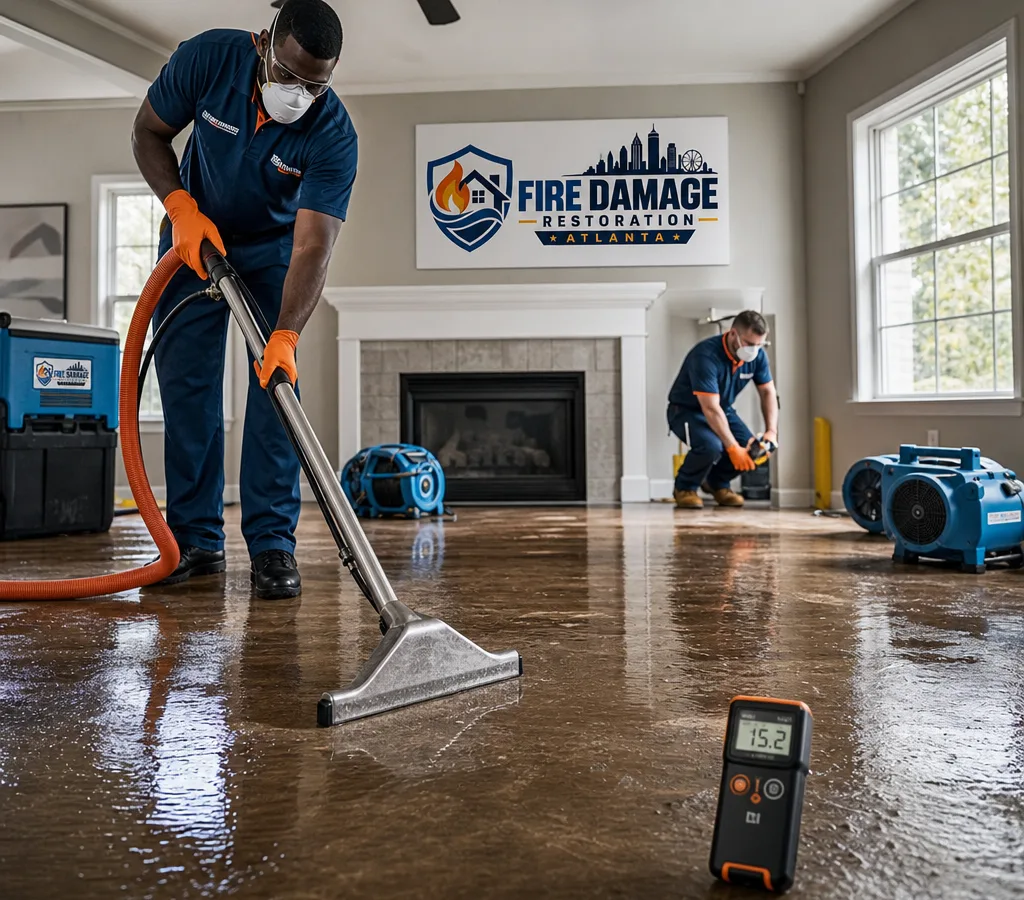
Water damage in Atlanta can move from a small leak to warped floors, damaged drywall, and odor in a matter of hours. Our team at Fire Damage Restoration Atlanta responds quickly to stabilize the situation, remove water, dry the structure, and document what we find so you can make clean decisions about repairs.
We handle water damage Atlanta needs for both homes and commercial spaces, including:
Atlanta's humidity can slow drying if the work is not set up correctly. We use controlled dehumidification, measured air movement, and ongoing moisture checks so materials dry at the right pace and you avoid hidden damp spots that lead to swelling, staining, or lingering odor.
We help identify where the water is coming from and what must stop first, then we isolate the affected areas to limit spread while work begins.
Drying is verified with moisture readings from materials that hold water, such as drywall, framing, subfloors, and baseboards.
When drywall, insulation, or flooring cannot be saved, we remove it cleanly and stage the area for safe drying and rebuild.
Not all water is the same. We treat Category 2 and 3 water situations differently and use appropriate cleaning and PPE practices.
Photos, notes, and moisture logs support insurance conversations and help you understand what was wet, what dried, and what needs repair.
We plan around access, pets, business hours, and occupied homes so the work gets done without unnecessary disruption.
The first goal is to stop additional loss. If safe to do so, shut off the water at the main valve and avoid using outlets in wet areas. Once we arrive, we focus on stabilization, then move into extraction and drying.
Initial inspection and mapping
We check visible damage and confirm where moisture traveled. Water often runs along joists, under baseboards, and beneath hard-surface flooring before it shows up.
Extraction and controlled drying
We remove standing water, set air movers and dehumidifiers, and monitor progress with moisture meters. Drying is adjusted as materials respond, because over-drying or uneven airflow can cause cracking, cupping, or adhesive failure.
Cleaning, disposal, and prep for repairs
If water was contaminated or materials are not salvageable, we perform a controlled removal and clean the affected surfaces. Then we leave a clear scope for rebuild work so you are not guessing what comes next.
If the water damage happened alongside a separate fire event, our Fire Damage Restoration team can coordinate next steps so cleanup and rebuild decisions stay organized.
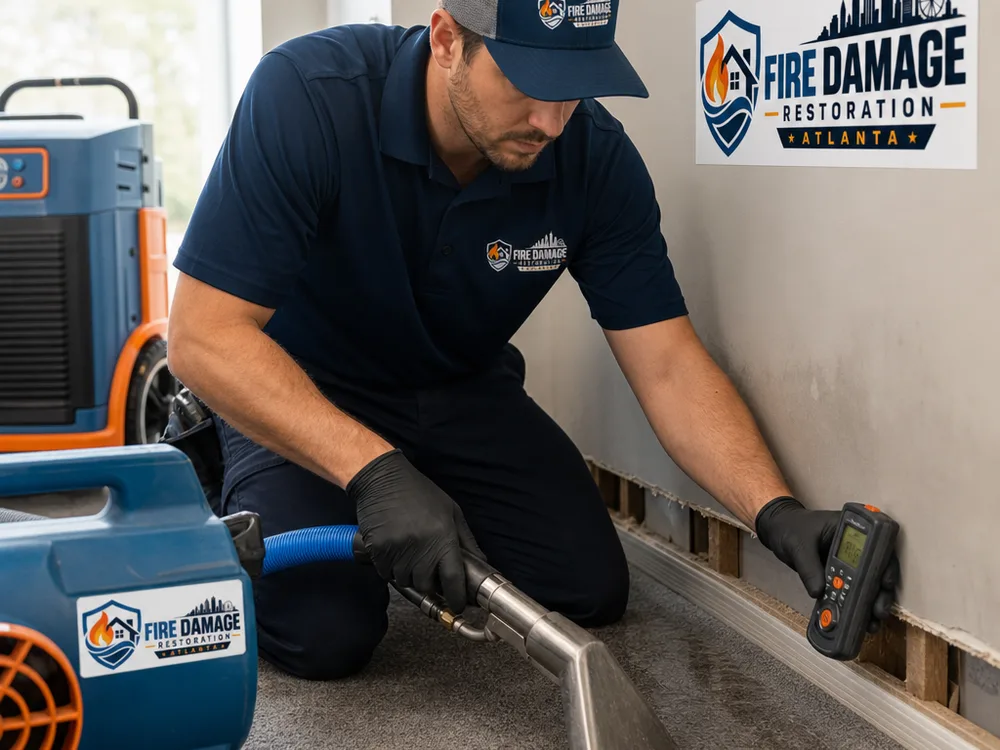
We confirm safety hazards such as electrical risks, slip risks, and ceiling sag, then help coordinate source control so the wet area does not grow.
We identify wet building assemblies and contents, then outline what can be dried in place and what likely needs removal.
Standing water is removed first, then we set air movement and dehumidification based on room volume and material load.
Drying is a measured process. We re-check moisture levels, reposition equipment, and confirm progress until targets are met.
We clean affected surfaces, deodorize when needed, and manage debris. You receive a clear plan for repairs so the property can be put back together correctly.
In Atlanta, the details matter because buildings vary widely. Condos and townhomes in areas like Midtown often share walls and have unit-to-unit risk, so quick containment and moisture checks along party walls matter. Older homes around Virginia-Highland can have plaster, original wood flooring, and layered renovations that trap moisture in unexpected cavities. Buckhead has a mix of basements and finished lower levels where water can sit in subfloors and behind trim if the drying plan is not aggressive enough.
Weather also plays a role. During humid stretches and storm season, outside air can add moisture rather than remove it. That is why we rely on dehumidification and measured air movement inside the affected zone, instead of simply opening windows.
If you are dealing with an active situation right now, take quick, safe steps: move small valuables off the floor, blot—do not rub—wet upholstery, and keep foot traffic out of saturated areas to prevent fiber damage and slip hazards. Then get a professional assessment so you do not miss moisture under flooring or inside walls.
Request Emergency ServiceWater damage restoration in Atlanta typically ranges from about $1,000 to $7,500+, depending on how far the water traveled and how much material must be removed and rebuilt. A small, contained leak with minimal demo may fall near the low end, while multi-room saturation, ceiling damage, or contaminated water can push costs higher.
Price is driven by the category of water, affected square footage, drying time, equipment needs, contents handling, access, and whether drywall, insulation, cabinetry, or flooring requires removal. The exact cost is confirmed after an on-site inspection and moisture mapping.
Request Emergency Service“A supply line under our sink failed and water ran into the cabinet and the adjacent room. They arrived quickly, explained what could be saved, and kept checking moisture levels until it was truly dry. The documentation made the insurance process much smoother.”
“We had water come through the ceiling in our office after a weekend storm. They contained the mess, dried everything out, and helped us plan repairs without dragging the downtime out for days.”
You should start mitigation the same day, because water can wick into drywall, baseboards, and subfloors quickly and Atlanta humidity can slow natural drying. The sooner extraction and controlled dehumidification begin, the better the chance of saving materials and preventing odor and secondary damage.
Drywall can sometimes be dried if the water was clean and the affected area is limited, but swelling, crumbling, or contaminated water usually means removal is safer. We confirm with moisture readings and the water category, then recommend drying in place or selective demolition based on what will remain structurally sound and clean.
Clean water starts from a sanitary source like a supply line, while contaminated water includes gray water, such as some drain overflows, and black water, including sewage. The category affects PPE, cleaning method, whether porous materials can be saved, and the amount of disinfecting and disposal required.
Most drying setups run about 3 to 5 days, but timelines vary based on how saturated materials are, how many rooms were affected, and what is behind walls or under floors. We verify progress with moisture checks and adjust equipment placement until target readings are reached, rather than stopping based on time alone.
Yes. We document affected areas with photos, notes, and moisture readings so you have a clear record of what was wet and what work was needed. Every insurer handles claims a bit differently, but solid documentation reduces back-and-forth and helps align scope and repairs.
Not always. Many projects can be contained to the affected rooms with safe access paths, but you may need to avoid certain areas due to drying equipment, noise, or safety concerns. For businesses, we can often schedule around operating hours and isolate work zones to limit downtime.
Tell us what happened and where the water is coming from. We will walk you through immediate next steps, inspect the affected areas, and provide a clear scope for cleanup, drying, and repairs.