
Rapid water removal
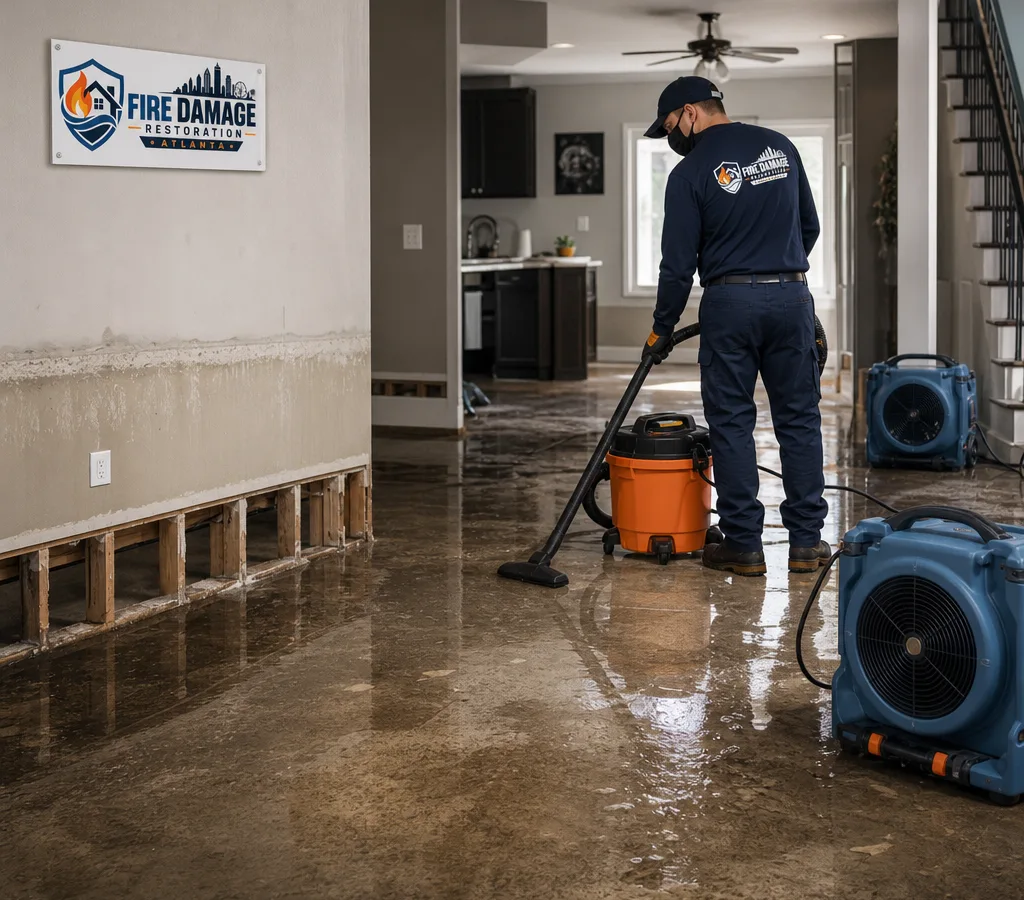
High-volume extraction for standing water, plus targeted removal in corners, under cabinets, and along wall lines where water collects first.
Serving Atlanta, Georgia & surrounding areas
24/7 Emergency Response
Fast cleanup, structural drying, and repair coordination for homes and small commercial spaces across Atlanta. Get a clear plan to stop further damage and bring the property back safely.
Flood damage restoration Atlanta property owners request is more than pumping water out of a room. It is a controlled process: remove standing water, document what happened, dry structure and contents to safe moisture levels, prevent microbial growth, and repair what cannot be saved.
Time is the difference between a manageable job and a much larger rebuild. Water travels under flooring, into wall cavities, and down through penetrations around plumbing and electrical. In Atlanta, heavy rain events and storm runoff can push water into basements, crawl spaces, garages, and ground-level rooms. Even when it looks dry on the surface, trapped moisture can keep framing and subfloors wet.
Our team at Fire Damage Restoration Atlanta responds with commercial-grade extraction and drying equipment, a written scope you can understand, and an approach built around safety: isolating affected areas, handling wet materials correctly, and verifying dry-out with moisture readings before repairs begin.
Every loss looks different, but many Atlanta projects follow familiar patterns:
If you are unsure whether you need full flood damage restoration or a smaller targeted dry-out, we can assess the affected materials, map moisture, and explain what should be removed versus dried in place.
Many clients first meet us through Fire Damage Restoration Atlanta and then bring us in for water and flood losses as well, because the same disciplined containment, documentation, and rebuild coordination matters here too.
High-volume extraction for standing water, plus targeted removal in corners, under cabinets, and along wall lines where water collects first.
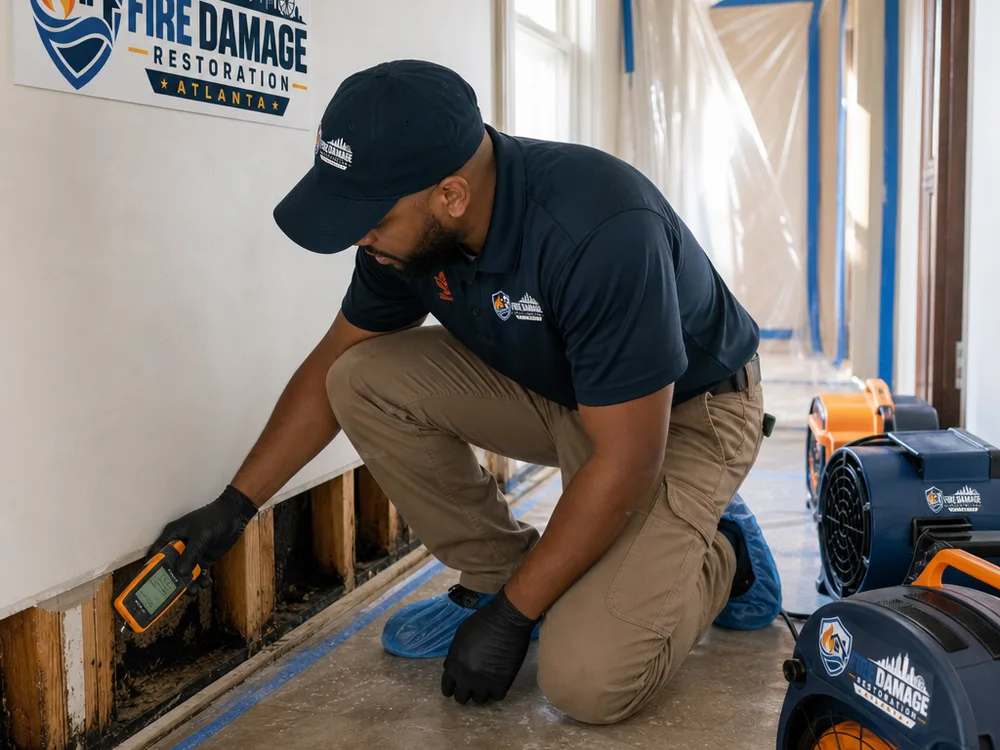
Air movers and dehumidifiers sized to the space, with moisture checks on framing, subfloor, and drywall to confirm real dry-out before closing walls.
Controlled demolition of unsalvageable drywall, insulation, trim, and flooring so wet materials are not sealed back into the structure.
Cleaning and treatment based on the water source and conditions, with attention to porous materials and hidden cavities where odors can start.
Once drying is complete, we help move the project into repairs like drywall, trim, paint, and flooring so the property can be put back together.
Photos, notes, and a scope that explain what was affected and what work was performed, so the claim conversation is grounded in details.
We confirm the water source is stopped and look for immediate safety issues such as compromised flooring, affected outlets, or sewage-contaminated areas that need containment.
We inspect what is visibly wet and what is likely wet behind surfaces. Moisture readings help define the true boundary of the loss so drying is not guesswork.
Standing water is removed first, then we pull wet materials when needed—such as swollen baseboards, saturated drywall, or collapsed insulation—to open cavities for drying.
We place air movers and dehumidifiers, manage airflow paths, and return to monitor progress. Adjustments are made as materials dry and conditions change.
We clean affected surfaces and advise on what items can be dried, cleaned, or should be discarded based on exposure and material type.
We verify moisture levels are back to an acceptable range for rebuilding, then move into repairs so the space can be safely finished and used again.
Flood losses in Atlanta often involve areas that are easy to overlook until damage spreads.
Crawl spaces are a big one. When water sits under the home, humidity rises and can keep wood components damp even after the visible water is gone. Drying a crawl space is different than drying a living room: it may require removing wet insulation, controlling vapor, and using dehumidification in a contained volume.
Finished basements and lower levels also take careful inspection. Water can wick upward in drywall and trim, and it can migrate under laminate, engineered wood, or carpet pad. If flooring is left in place while the subfloor stays wet, odors and staining often return later.
Older housing and renovations can complicate the plan. Mixed assemblies—new drywall over old plaster, multiple flooring layers, and older framing—change how water moves and how quickly it dries. We tailor the approach to the structure in front of us, then document why each step is necessary.
If your loss overlaps with smoke or fire-related cleanup, keep scopes separated so each trade does the right work in the right order. Some property owners start by addressing emergency stabilization first and then coordinate broader restoration; our core fire damage restoration work can be coordinated alongside flood recovery when needed.
Request Emergency ServiceFlood damage restoration in Atlanta typically ranges from about $1,500 to $7,500 for a smaller affected area with drying and minor removal, while larger losses that require extensive demolition and rebuild often run $10,000 to $30,000+.
Your final cost depends on the amount of standing water, how far moisture spread into walls and floors, the water category (clean vs contaminated), access to the affected area (basements and crawl spaces take more labor), and what materials must be removed and replaced. The exact scope and price are confirmed after an on-site inspection and moisture mapping.
Request Emergency Service“Water got into our downstairs after a storm and the flooring felt dry in spots, but their moisture checks showed it had spread under the baseboards. The drying setup was organized and they explained what had to come out and what could be saved.”
“They documented everything for the insurance claim and kept the work area contained. The biggest help was having a clear plan for extraction, drying, and then repairs so we could get back in the space.”
In many cases we can begin the same day, and the right first step is an on-site assessment to stop the source (if possible), extract water, and start structural drying before moisture spreads further. Early extraction and dehumidification reduce the amount of material that has to be removed and lowers the chance of lingering odors.
You often can stay if the affected area is contained and utilities are safe, but it depends on where the water went and whether contaminated water is involved. If bedrooms, HVAC returns, or a large portion of the main level are affected, temporary relocation can be more practical while drying equipment runs and wet materials are removed.
Most dry-outs take 3 to 7 days, but it can be longer if water reached wall cavities, insulation, subfloors, or a crawl space. We monitor progress with moisture readings and adjust equipment placement so drying is based on measurements, not a fixed timeline.
Shut off the water source if it is safe, avoid using outlets or rooms with wet electrical, and move small valuables to a dry area if you can do it without walking through standing water. If you can safely take photos of the affected rooms and visible water lines, that documentation helps with both the restoration plan and the claim process.
We remove materials when they are unsalvageable or when they block drying of the structure, which is common with swollen baseboards, saturated drywall, carpet pad, and some flooring assemblies. When materials can be dried in place without trapping moisture, we set up controlled airflow and dehumidification and verify results with moisture readings before repairs.
Yes. We document the affected areas with photos, notes, and a clear scope of work so the claim discussion is tied to what was wet, what was removed, what equipment was used, and what repairs are needed. Coverage decisions vary by policy and water source, but good documentation reduces confusion and delays.
Tell us what happened and what areas are affected. We will inspect, map moisture, and outline the steps needed to dry and restore your Atlanta property without cutting corners.