
Clear source and category assessment
We identify where the water came from and how it affects safety and scope. Clean supply-water damage is handled differently than water impacted by backups or outdoor intrusion.
Serving Atlanta, Georgia & surrounding areas
24/7 Emergency Response
Fast water removal, professional drying, and careful repairs to help prevent bigger damage and get your space back to normal.
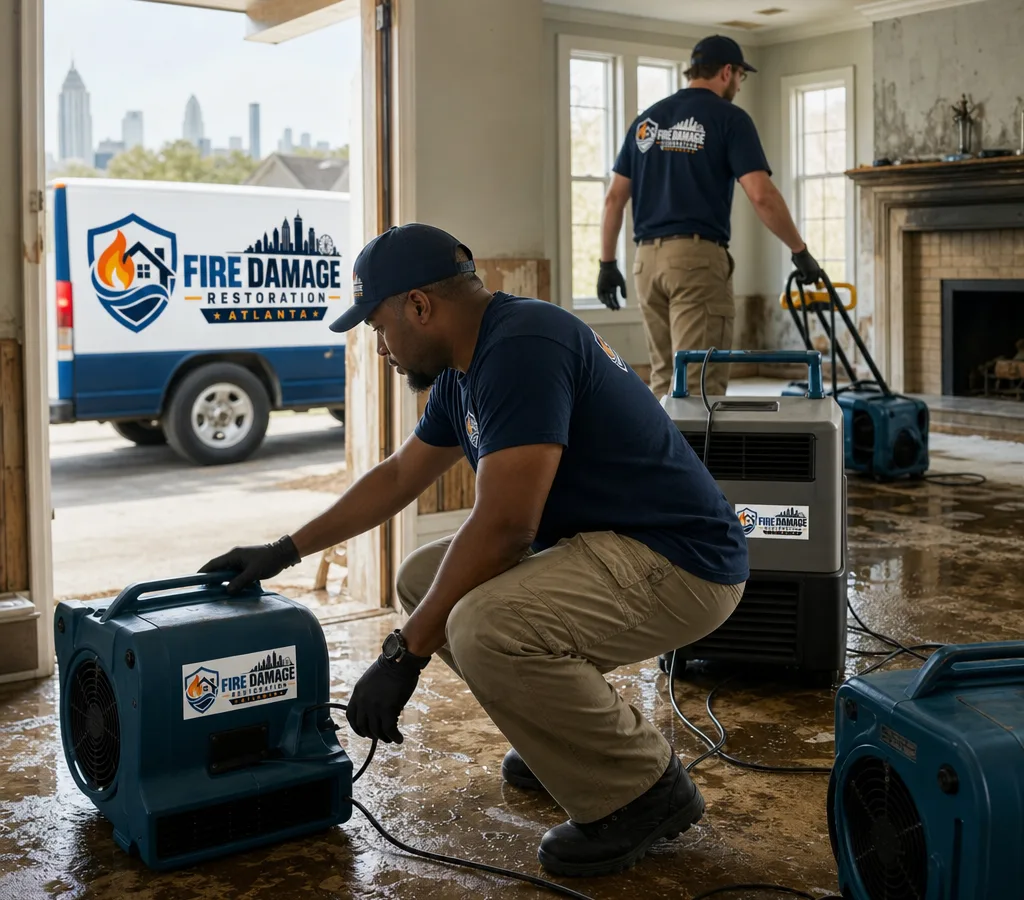
If you are searching for a water restoration company Atlanta property owners can rely on, the first priority is simple: stop the damage from spreading. Water moves fast through drywall, baseboards, flooring, and insulation. The longer materials stay wet, the harder it is to save them and the higher the risk of odor and microbial growth.
At Fire Damage Restoration Atlanta, we restore properties after common Atlanta water events like supply-line leaks, overflowing fixtures, water heater failures, HVAC drain backups, and storm-related water intrusion. We focus on the parts that actually change the outcome: extracting water quickly, drying to verifiable targets, and rebuilding only what truly cannot be saved.
Atlanta's humidity makes drying strategy matter. In warm, moist air, surfaces can feel dry while cavities and subfloors stay wet. That is why we rely on moisture mapping and equipment sized for the structure, not guesswork.
We identify where the water came from and how it affects safety and scope. Clean supply-water damage is handled differently than water impacted by backups or outdoor intrusion.
Standing water is removed first, then we open only the areas needed to dry properly, such as wet drywall, baseboards, or swollen flooring.
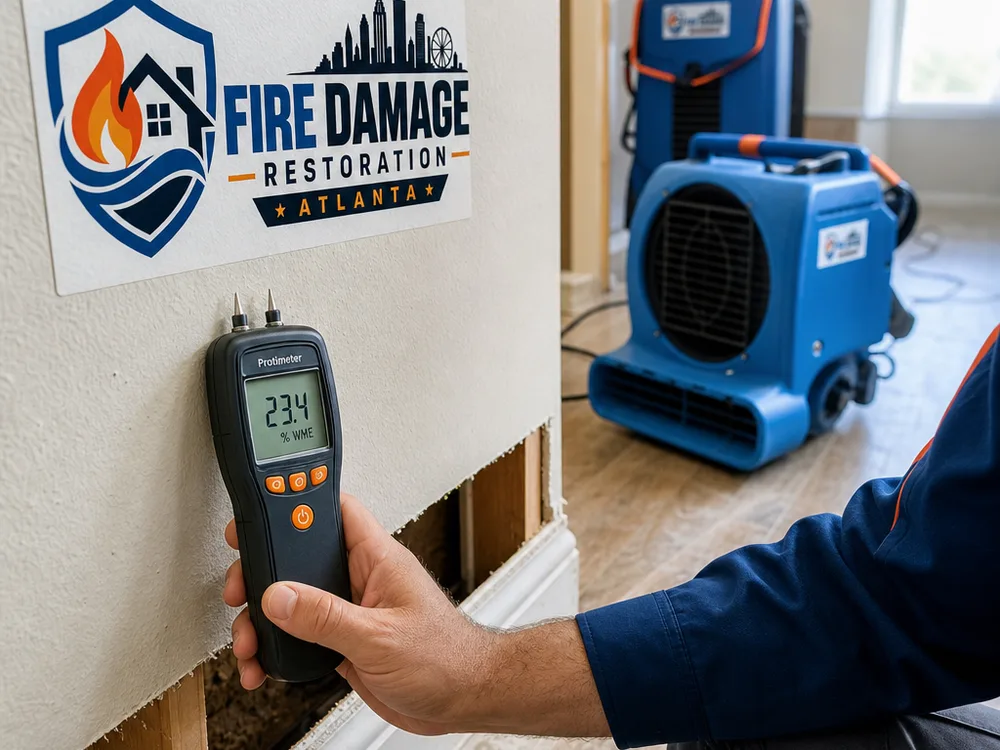
Drying is measured, not assumed. We track affected materials and verify drying progress so repairs start at the right time.
High ambient humidity can slow evaporation. We use commercial dehumidifiers and air movement to create stable drying conditions indoors.
After drying, we rebuild with a clean scope: drywall, trim, paint, flooring transitions, and other affected finishes as needed.
You get a written plan, realistic timeline, and guidance on what to move, what to avoid turning on, and how to keep the area safe during the work.
Water restoration is more than drying the visible area. A good plan targets where water hides and how materials release moisture.
Typical steps include:
In Atlanta, you will often see water travel along framing and settle into low points. That is especially common in split-level homes and finished basements, where moisture can collect behind baseboards and under subfloors.
We locate the affected areas, look for electrical or slip hazards, and confirm the water source is stopped, or coordinate next steps if it is still active.
We extract water, set up protection for flooring and walk paths, and move or block off items that could be damaged during drying.
We position air movers and dehumidifiers based on room size, materials, and moisture readings. If wet materials will not dry in place, we remove them to expose cavities.
We document progress with moisture checks. Equipment is repositioned as needed, and drying continues until readings show the structure is ready for rebuild.
We complete the repair scope and review the restored areas with you so you know what was done and what to watch for after re-occupying the space.
Water restoration in Atlanta typically ranges from $1,500 to $7,500 for many residential jobs, with small, contained incidents sometimes closer to $800 to $1,500 and larger losses involving multiple rooms, wet subfloors, or significant tear-out reaching $10,000+.
Your price depends on how far water spread, how long materials stayed wet, the type of flooring and drywall affected, access to cavities, and whether rebuild is needed after drying. The exact cost is confirmed after an on-site inspection and moisture mapping.
Request Emergency ServiceDrying and repair needs can change block by block depending on building type and how water can travel.
Midtown: High-rise condos and mixed-use buildings often involve shared walls and stacked plumbing lines. Fast documentation matters because damage can affect units above or below.
Buckhead: Larger homes with multiple HVAC zones and finished lower levels can hide moisture in mechanical rooms, behind built-ins, and under wide plank flooring where cupping can show up days later.
Old Fourth Ward: A mix of older homes and newer renovations means materials vary. Some assemblies dry quickly, while tight wall cavities or layered flooring systems require selective removal to dry correctly.
East Atlanta: Crawl spaces and additions can create odd transitions where water collects at seams and low points. Mapping those transitions early helps avoid a second round of repairs.
We also help owners sort out related issues when they overlap with water damage. If smoke or soot is part of the same event, our fire damage restoration work can be coordinated so the repair plan stays consistent.
Request Emergency Service“A supply line leak soaked our kitchen and the room next to it. The crew got the water out quickly, explained what had to be opened up, and kept checking moisture until it was truly dry. The repair work blended in with the existing finish.”
“We had water spread under flooring and it was hard to tell how far it went. They mapped it out, set up drying the same day, and gave us a clear plan for what would be repaired after drying.”
Water source, contamination risk, electrical exposure, and slip hazards shape the first actions. Clean supply water requires a different scope than backups or outdoor intrusion.
When contamination or debris may spread, the work area is isolated while unaffected flooring, walk paths, belongings, and occupied spaces are protected.
Moisture readings and written updates show where water traveled, how conditions change, and when materials are ready for repair.
Once drying targets are met, the repair plan covers only materials that could not be saved and the finishes required to return the affected space to use.
You should start mitigation as soon as possible, ideally the same day, because water can wick into drywall, insulation, and subfloors quickly in Atlanta's humid conditions. Early extraction and dehumidification often reduce how much material needs to be removed and rebuilt.
Most drying phases take about 3 to 5 days, but the total timeline depends on how wet the structure is and what needs to be rebuilt afterward. Materials like dense hardwood, layered flooring systems, and insulated wall cavities can extend drying time.
No, removal is only required when materials cannot dry in place or when leaving them would trap moisture. We use moisture readings to decide whether controlled demolition is needed, such as removing a section of drywall to dry a wall cavity or lifting flooring where water is trapped underneath.
Yes, drying is verified with moisture measurements so repairs are not started over wet materials. That verification helps reduce the risk of odor, swelling, and finish failure after the rebuild.
If it is safe, stop the water source and move small items away from wet areas, especially paper goods and electronics. Avoid running HVAC if water has entered vents or returns, and do not use household fans as a substitute for dehumidification if humidity is high, because that can slow effective drying.
Yes, storm-related water intrusion and interior plumbing leaks are both handled through the same core steps: identifying spread, extracting water, drying to targets, and repairing affected finishes. The main difference is where water enters and what building assemblies are affected, such as roof or window pathways during heavy rain.
Tell us what happened and what areas are affected. We will inspect the damage, explain the drying and repair scope, and help you take the next step with a clear timeline.