Emergency board-up and stabilization
We help secure openings, isolate affected areas, and assess structural concerns so weather, theft, and foot traffic do not make the loss worse.
Serving Atlanta, Georgia & surrounding areas
24/7 Emergency Response
After a fire, the next steps matter. Our certified team handles cleanup, smoke odor removal, and rebuild coordination so your home or business can move from damage to a clear, documented plan.
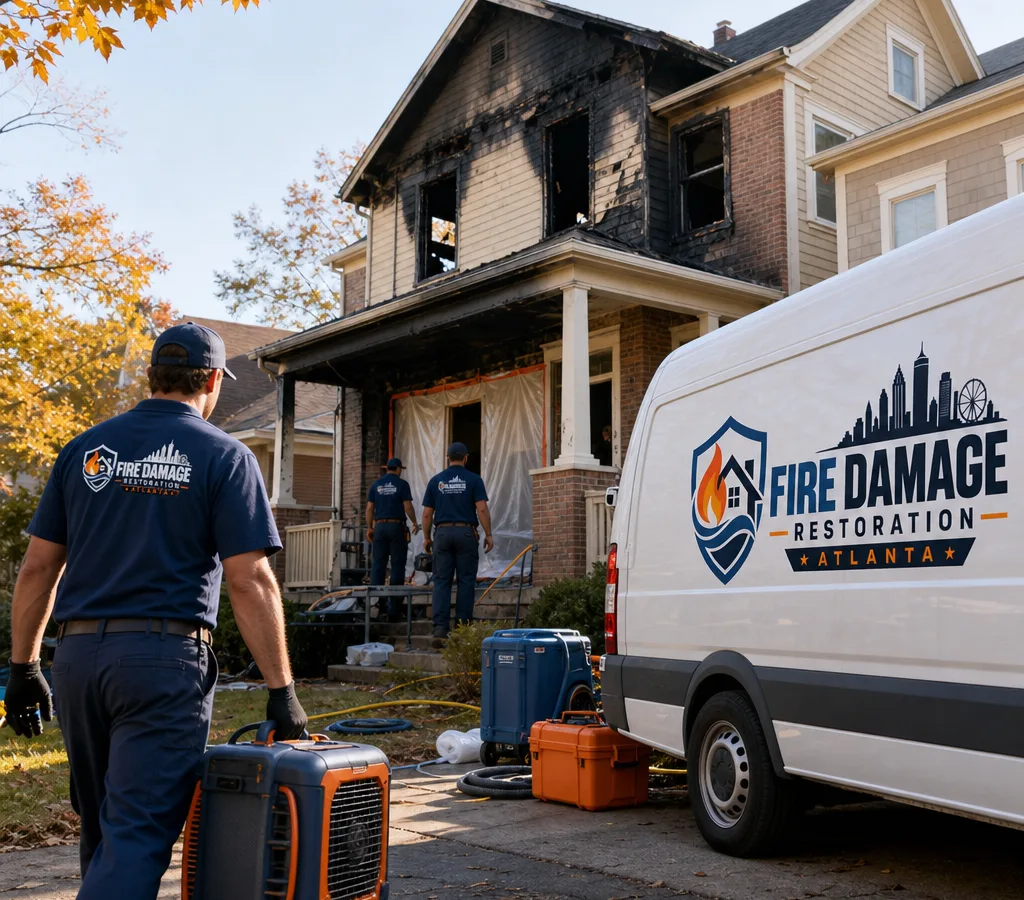
If you are searching for fire restoration atlanta ga, you likely need more than debris removal. Fire damage is usually a mix of charring, soot residues, smoke odor, water from suppression, and unsafe air quality. The right approach starts with stabilizing the structure and documenting conditions, then moving through controlled cleanup and targeted deodorization.
Fire Damage Restoration Atlanta provides atlanta fire restoration for residential and commercial properties across the metro. We focus on doing the work in the correct order: secure the site, stop secondary damage, clean and neutralize soot, address smoke odor at the source, dry what can be saved, and then plan the repairs. You get a written scope and clear communication so you are not guessing what happens next.
Many losses in Atlanta involve a mix of materials that respond differently to heat and soot, including drywall, framing, masonry, flooring, and HVAC components. Our job is to identify what is restorable, what needs removal, and what needs specialized treatment so the property can be safely occupied again.
We help secure openings, isolate affected areas, and assess structural concerns so weather, theft, and foot traffic do not make the loss worse.
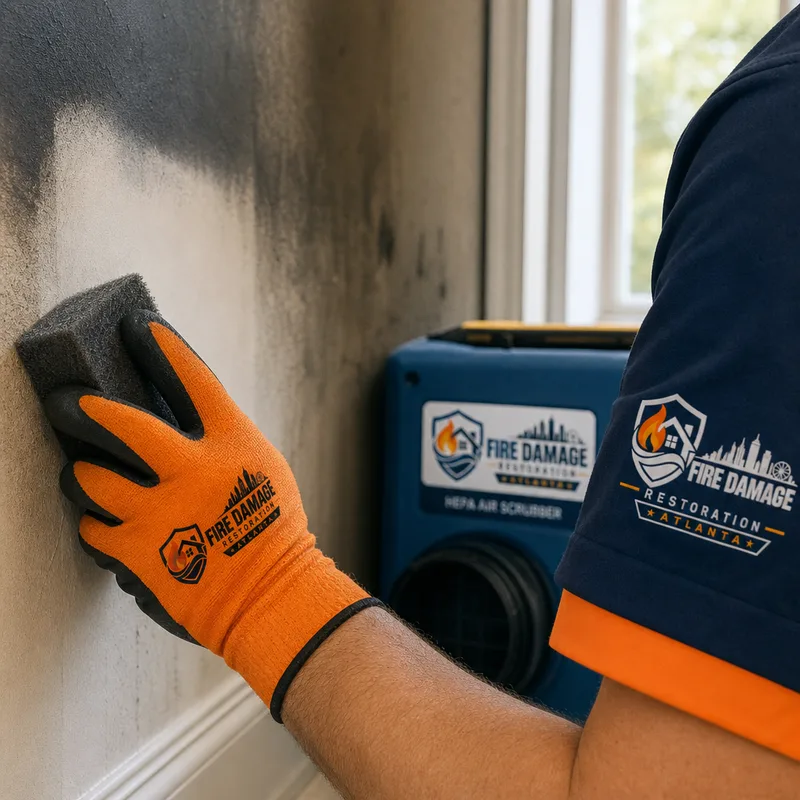
We use professional-grade HEPA filtration and proven soot removal methods for different residue types, including dry soot and sticky, protein-based residues from kitchen fires.
Odor control is not a cover-up. We treat porous materials and affected cavities using approaches such as thermal fogging or hydroxyl/ozone use where appropriate and safe for the situation.
Fire losses often become water losses. We extract, dry, and monitor moisture to reduce the risk of swelling, warping, and microbial growth.
When items can be saved, we sort, inventory, and coordinate cleaning and storage so restoration work can move forward efficiently.
We provide photos, notes, and a clear scope of work that aligns with common claims workflows, helping reduce back-and-forth during approvals.
Soot is not one uniform substance. Different fires create different residues, and each residue requires a different cleaning chemistry and technique. A fast, one-size approach can smear soot into surfaces, permanently stain finishes, or drive odor deeper into porous materials.
Common situations we see during fire restoration in Atlanta include:
We typically begin with containment and air filtration, including negative air where needed, to control cross-contamination. We then test and select the appropriate cleaning approach, which may include dry chemical sponges for certain surfaces, wet cleaning with the correct agents, and controlled demolition of materials that cannot be restored. The goal is to remove the source of odor and corrosion-causing residues, not just improve appearance.
If you are also looking for the same team and standards across the full range of property recovery work, our main Fire Damage Restoration service covers how we approach multi-trade restoration planning after a loss.
We confirm safe entry, identify immediate hazards, and set the initial plan for securing the structure and protecting unaffected areas.
We document affected rooms, materials, and contents, then outline what can be cleaned, what needs removal, and what requires specialty treatment.
We control airflow and particulates using containment, HEPA filtration, and targeted ventilation so soot does not spread through the property.
We remove residues from ceilings, walls, framing, masonry, fixtures, and hard surfaces using methods matched to the residue type and the substrate.
We address odor sources in porous materials and evaluate HVAC impact, since ductwork and returns can distribute smoke throughout the building.
If water was used to extinguish the fire, we dry and monitor moisture. Then we finalize a repair plan and complete the restoration to the agreed scope.
Atlanta properties range from older homes with plaster, lath, and original framing to newer builds with engineered materials and open floor plans. That mix changes how smoke moves and what can be restored.
In neighborhoods with older housing stock such as Virginia-Highland and Inman Park, smoke can move through wall and ceiling cavities and settle into original woodwork and porous finishes. In areas with many condos and mixed-use buildings like Midtown and Buckhead, restoration often involves tighter access, shared hallways, and careful containment to prevent odor migration into neighboring units.
Atlanta's humid climate also matters after suppression water is introduced. If wet materials are left in place too long, drying times stretch and secondary damage becomes more likely. A good fire restoration plan accounts for both the fire residues and the moisture load so the building can be stabilized quickly.
We also understand the role of the local authority having jurisdiction for fire scenes. If the property is within City of Atlanta limits, the Atlanta Fire Rescue Department may restrict access until the scene is released. We coordinate around those realities and begin work as soon as it is safe and permitted.
Request Emergency ServiceFire restoration in Atlanta typically ranges from about $3,000 to $12,000 for a small, contained loss, while larger fires involving multiple rooms, heavy soot, water damage, and reconstruction often run $20,000 to $75,000+ depending on what must be removed and rebuilt.
Final pricing changes with the size of the affected area, soot type and depth, whether the HVAC system was impacted, contents cleaning needs, access (single-family vs condo), and how much water was used during extinguishment. The exact cost is confirmed after an on-site inspection and a written scope of work.
Request Emergency Service“Our kitchen fire looked small, but the smoke got everywhere. The crew explained what could be cleaned versus what had to come out, and the odor was actually gone after their treatment plan.”
“They documented everything for the claim, set up containment to keep the rest of the house clean, and kept the schedule moving. That made a stressful situation manageable.”
Fire restoration should start as soon as the property is released for access and it is safe to enter, because soot residues can stain surfaces and corrosive residues can begin damaging metals and electronics. Early stabilization also helps prevent secondary water damage and odor absorption into porous materials.
Smoke odor can usually be removed when the source residues are fully cleaned and affected porous materials are treated or removed as needed. Successful deodorization often combines source removal (soot cleanup and selective demolition) with controlled deodorization methods such as hydroxyl treatment or thermal fogging, based on the structure and safety requirements.
Do not re-enter until authorities say it is safe, and avoid running HVAC because it can spread soot and odor through ductwork. If you can safely take photos for documentation and secure pets and valuables outside the affected area, that helps, but do not disturb soot or wet materials if it risks contamination or injury.
Yes, we can support the claims process by providing photos, moisture readings when relevant, and a clear written scope that explains what is being cleaned, removed, and restored. Coverage decisions are made by the carrier, but good documentation reduces delays and misunderstandings.
It depends on the extent of soot, odor, and any structural or electrical hazards. Small, contained losses may allow limited occupancy with proper containment and air filtration, while larger losses typically require temporary relocation until air quality and safety are verified.
Fire restoration often includes both mitigation (cleanup, deodorization, drying) and repair work, but the exact scope depends on what the fire affected. After inspection, we outline what can be restored versus rebuilt so you can make informed decisions before any reconstruction begins.
Tell us what happened and what areas were affected. We will assess the damage, explain the next steps, and provide a written scope you can use to move forward with confidence.