Water Damage Service · Atlanta, Georgia

Water Damage Companies Atlanta

Fast response, clear steps, and documented drying so you can protect your home, your finishes, and your claim after a leak or flood.

Moisture readings and mapping
Documented drying progress
Mitigation through repair planning
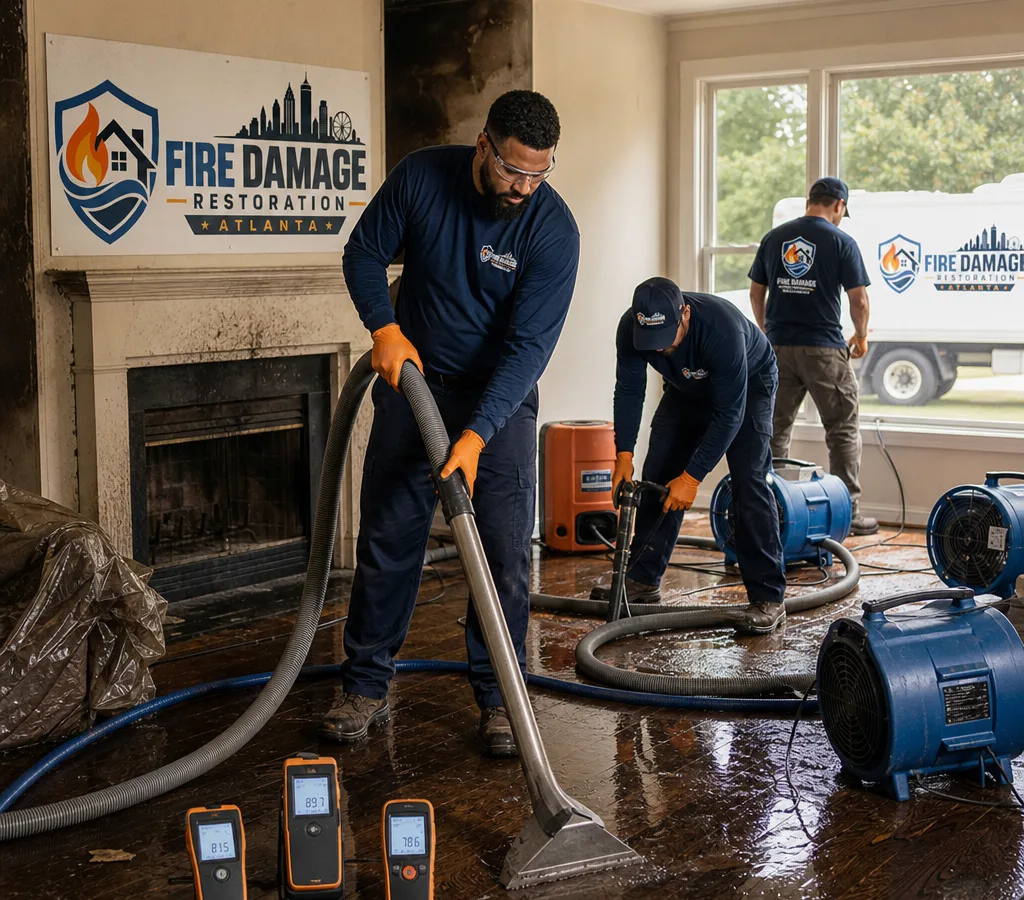
Atlanta restoration crew in protective equipment extracting water from a residential living room with air movers and moisture meters nearby
Make the First Decisions Count

Choosing a water damage company in Atlanta: what matters first

When you search for water damage companies Atlanta residents rely on, you are usually dealing with a time-sensitive problem: a burst supply line, an overflowing tub, an HVAC drain backup, or stormwater getting in. The first goal is to stop the source and remove standing water. The second goal is controlled drying and verification, because what stays wet behind drywall, under flooring, or inside cabinets is what turns into swelling, odor, and microbial growth.

In Atlanta, water damage decisions often come down to access and building materials. Many homes and condos have layered assemblies—drywall, insulation, trim, hardwoods, and tile over underlayment—that trap moisture. In denser areas like Midtown and Downtown, elevator access, parking, and HOA rules can affect staging equipment and work hours. Around Buckhead and the 30305 area, higher-end finishes and built-ins can raise the stakes for careful removal and reinstallation planning. No matter the neighborhood, the best water damage restoration companies in Atlanta will be able to explain what is wet, how they measured it, and what the plan is to dry it back to a stable level.

Fire Damage Restoration Atlanta helps Atlanta property owners coordinate water cleanup and restoration with a practical, trade-forward approach: document the loss, remove water quickly, dry with the right equipment, and keep you informed about what is being removed and why. You can also get to know our team and service area through Fire Damage Restoration Atlanta if you want background before scheduling an inspection.
Request Emergency Service
Clear Scope and Verified Drying

What to expect from reputable water damage companies in Atlanta

A written scope you can follow

You should receive a clear outline of mitigation steps: extraction, selective demo, drying setup, monitoring, and what comes next for repairs. It should identify affected rooms and materials, not just a generic checklist.

Moisture measurement and daily tracking

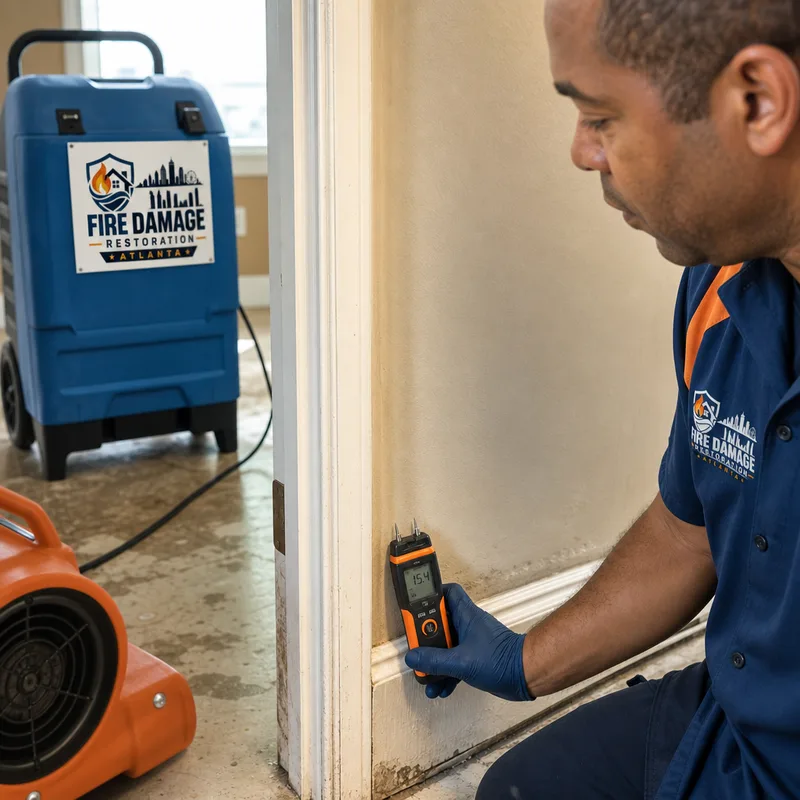
Drying should be guided by moisture meters and humidity readings, with progress checks. The point is to verify drying, not guess based on time or heat alone.

Containment when materials are disturbed

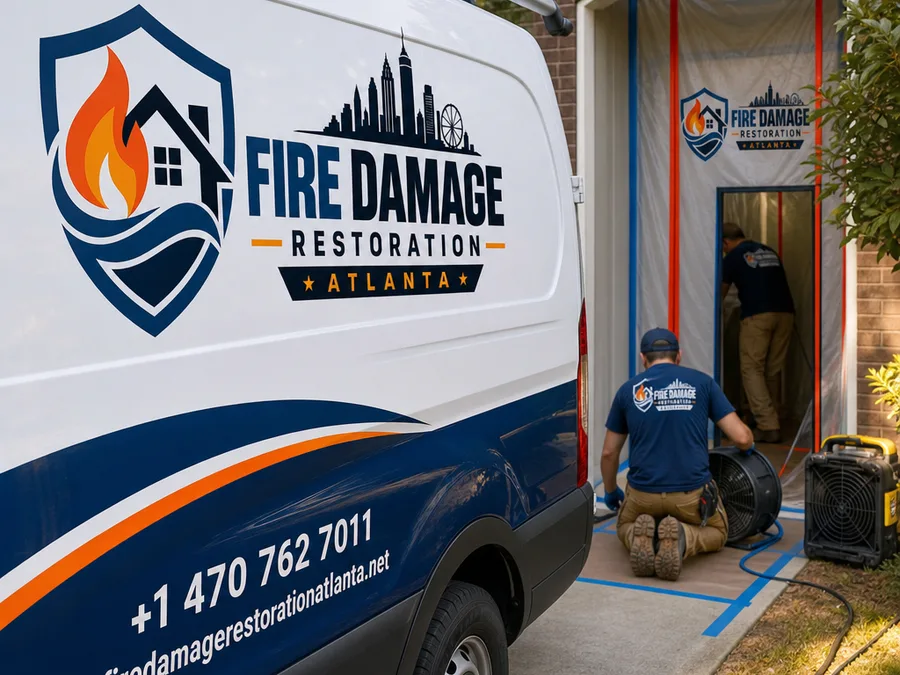
If wet drywall, insulation, or flooring needs removal, the work area should be controlled to limit dust and cross-contamination, especially in occupied homes and condos.

Equipment matched to the loss

Air movers, dehumidifiers—including low-grain refrigerant units when needed—and targeted drying tools should be sized to the wet area and the building layout.

Documentation for property managers and insurers

Photos, readings, and notes help communicate what happened and what was done. This is especially useful for multi-unit buildings, HOA reporting, and claim files.

Straight answers on repair coordination

Mitigation stops the damage from spreading; repairs put the home back together. A good company explains the handoff and timing so you can plan for flooring, paint, cabinets, and trim.

Request Emergency Service
Controlled Mitigation

How water damage restoration actually works (and what a company should show you)

A professional water damage company in Atlanta should be comfortable walking you through the same core workflow every time, with small adjustments for the building and the source of water.

First, the team identifies the affected materials and checks likely migration paths. Water can move through baseboards, under floating floors, into stair stringers, and down to lower levels in stacked units. Then extraction removes bulk water. After that, selective removal may be needed when materials cannot dry in place, such as saturated insulation or swollen engineered wood.

Drying is not just running fans. Dehumidification capacity, airflow placement, temperature, and isolation of the wet area all affect results. You should see equipment staged intentionally, not randomly. Finally, monitoring ties it together: moisture readings in drywall, wood, and subfloor, plus humidity checks, tell you when it is safe to close cavities and start repairs.

If you are comparing water damage companies in Atlanta, ask one practical question: “What readings will you take today, and what reading tells you drying is done?” The answer should be specific to your materials and rooms.

Request Emergency Service
Technician using a pin moisture meter on baseboard and drywall with a dehumidifier and air mover in the background
From Intake to Verification

Clear steps: what happens after you contact a water damage company Atlanta homeowners hire

01

Quick intake and safety checks

You share what happened and when. If it is safe to do so, you shut off the water source and power to affected areas. The team arrives ready to assess standing water, slip hazards, and any ceiling bulges or active leaks.

02

Inspection, moisture mapping, and documentation

The technician checks visible and hidden wet areas and documents the scope with photos and readings. In condos or townhomes, this often includes checking shared walls and the unit below if there is any sign of migration.

03

Extraction and stabilization

Standing water is removed, wet contents may be moved for airflow, and the area is stabilized. The goal is to reduce further damage immediately, especially to hardwoods, cabinetry, and drywall seams.

04

Selective removal where drying-in-place is unrealistic

If materials are holding water or blocking airflow, the crew removes only what is needed to dry the structure properly. You should be told what is being removed and what that means for the repair phase.

05

Structural drying and monitoring

Air movers and dehumidifiers run with intentional placement and containment. Moisture and humidity are rechecked as drying progresses so equipment can be adjusted instead of left on autopilot.

06

Drying verification and next-step planning

Once target areas reach an acceptable dry standard for the material, you get a clear wrap-up: what was dried, what was removed, and what repairs are needed to return the home to pre-loss condition.

Request Emergency Service
Scope Before Work Begins

How Much Does Water Damage Restoration Cost in Atlanta?

Water damage restoration in Atlanta typically ranges from about $1,500 to $7,500+ for mitigation and drying, with small, contained leaks on the lower end and multi-room losses with removal on the higher end. A simple extraction and drying setup may be closer to $1,500 to $3,000, while losses that require removing wet drywall, insulation, or flooring often move into the $4,000 to $7,500+ range.

Final price depends on the size of the wet area, how long water sat, what materials are affected—hardwood and cabinets cost more to manage—access such as condos and parking or loading, and whether Category 2 or 3 water precautions are required. Exact scope and cost should be confirmed after an on-site inspection and moisture mapping.

Request Emergency Service

What good mitigation looks like on site

Organized equipment, controlled work areas, documented readings, and clean preparation for the repair phase.

Crew setting up air movers and a dehumidifier in a condo hallway with protective flooring and containment
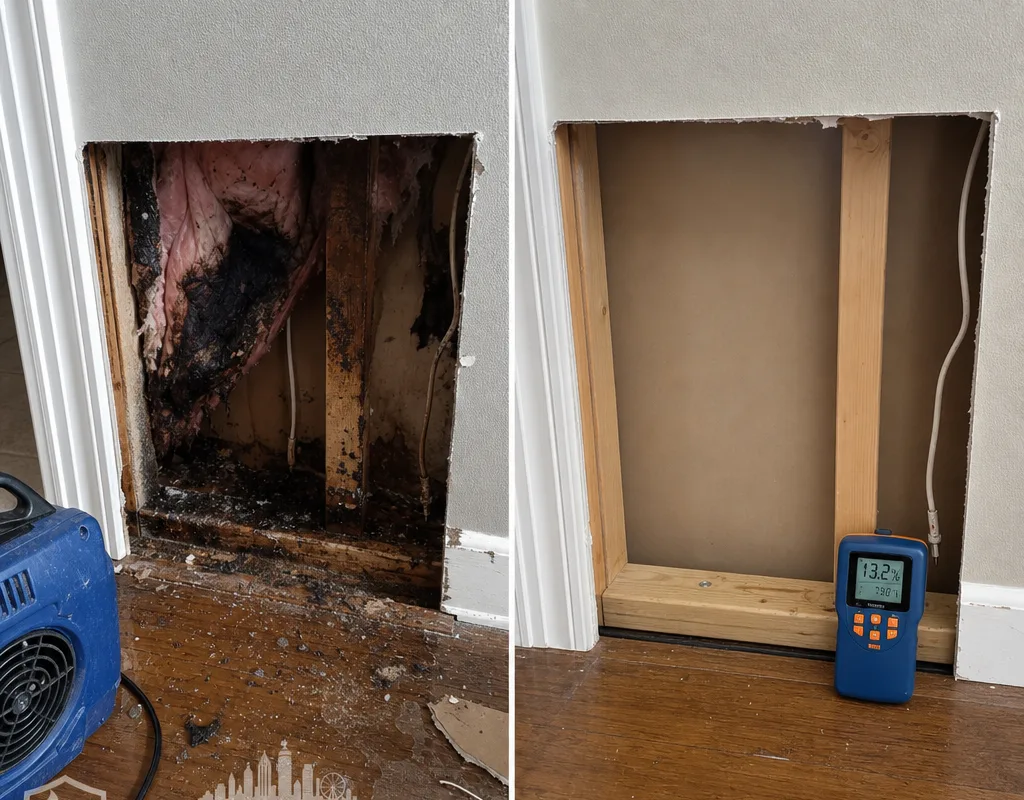
Before and after view of wet drywall removal followed by a dry wall cavity prepared for repair
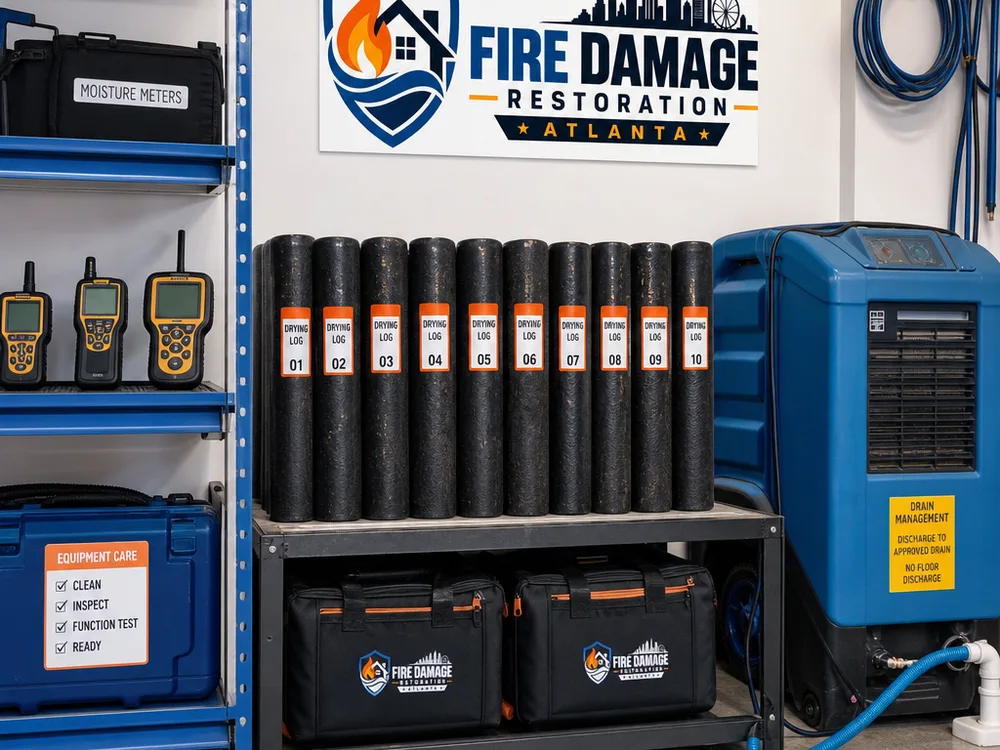
Equipment staging area with drying logs, moisture meters, and managed dehumidifier drainage
Request Emergency Service
Straight Answers for Atlanta Property Owners

FAQs about water damage companies in Atlanta

How fast should water damage companies in Atlanta respond? +

You should expect a rapid response because the first 24 to 48 hours can determine how much material can be saved versus removed. Standing water and high humidity can drive swelling in wood floors and cabinets, and moisture can move behind baseboards and drywall quickly. Ask for a realistic arrival window and what you should do immediately for safety, including shutoff, power, and moving items.

What questions should I ask a water damage company in Atlanta before work starts? +

Ask what materials are affected, what readings they took, what equipment they plan to use, and what would trigger selective demolition. Also ask how they will document progress for an insurer or property manager, and who coordinates repairs after drying. A solid answer includes specific rooms, materials, and a monitoring plan, not just a promise to “dry it out.”

Do water damage restoration companies in Atlanta handle insurance paperwork? +

Many can provide the documentation insurers typically request, such as photos, moisture readings, drying logs, and an itemized scope of mitigation work. That documentation supports your claim, but coverage depends on your policy and the cause of loss. For condos, it also helps when a property manager or HOA needs proof of stabilization and drying.

Can a water damage company in Atlanta dry hardwood floors without removing them? +

Sometimes, but it depends on how long the water sat, the type of flooring, and whether moisture is trapped in the subfloor. Quick extraction and controlled dehumidification can improve the odds, but cupping, buckling, and swelling may still require removal. The decision should be based on moisture readings in the flooring and subfloor, not just how the surface looks.

Is it safe to stay in the home during water damage cleanup? +

Often yes for small, clean-water losses, but it depends on affected rooms, electrical safety, and whether materials need removal behind containment. If the water source is questionable, such as a backup, or drying requires isolating key living areas, you may want to limit occupancy. A reputable crew will explain the safety plan, ventilation, and any restricted areas.

What is the difference between mitigation and repairs after water damage? +

Mitigation is the urgent work that stops ongoing damage: extraction, removal of unsalvageable wet materials, drying, and verification. Repairs are the rebuild phase: drywall replacement, painting, trim, flooring, cabinetry work, and finishing. When comparing water damage companies in Atlanta, make sure you understand where mitigation ends so you can plan the repair timeline and trades.

Need help sorting out the next step after water damage?

Get an on-site assessment with moisture readings, a written scope, and a clear plan for drying and restoration so you can make decisions quickly and protect the property.