Rapid water removal and controlled drying
Extraction, dehumidification, and air movement sized to the loss. Drying is monitored with moisture readings so materials are not closed up wet.
Serving Atlanta, Georgia & surrounding areas
24/7 Emergency Response
One call instead of ten No web forms, no callback spam 24/7 Emergency Response
When water gets into floors, walls, or cabinets, time matters. Our team responds fast, documents what happened, and dries your property the right way so repairs stay smaller and air quality stays safer.
✓ Skip the 3-hour Google rabbit hole — we’ve already done the vetting
✓ One conversation, not ten voicemails and seven web forms
✓ 24/7 emergency response — talk to a real person who actually knows Atlanta Restoration
A real person answers - 24/7 Emergency Response
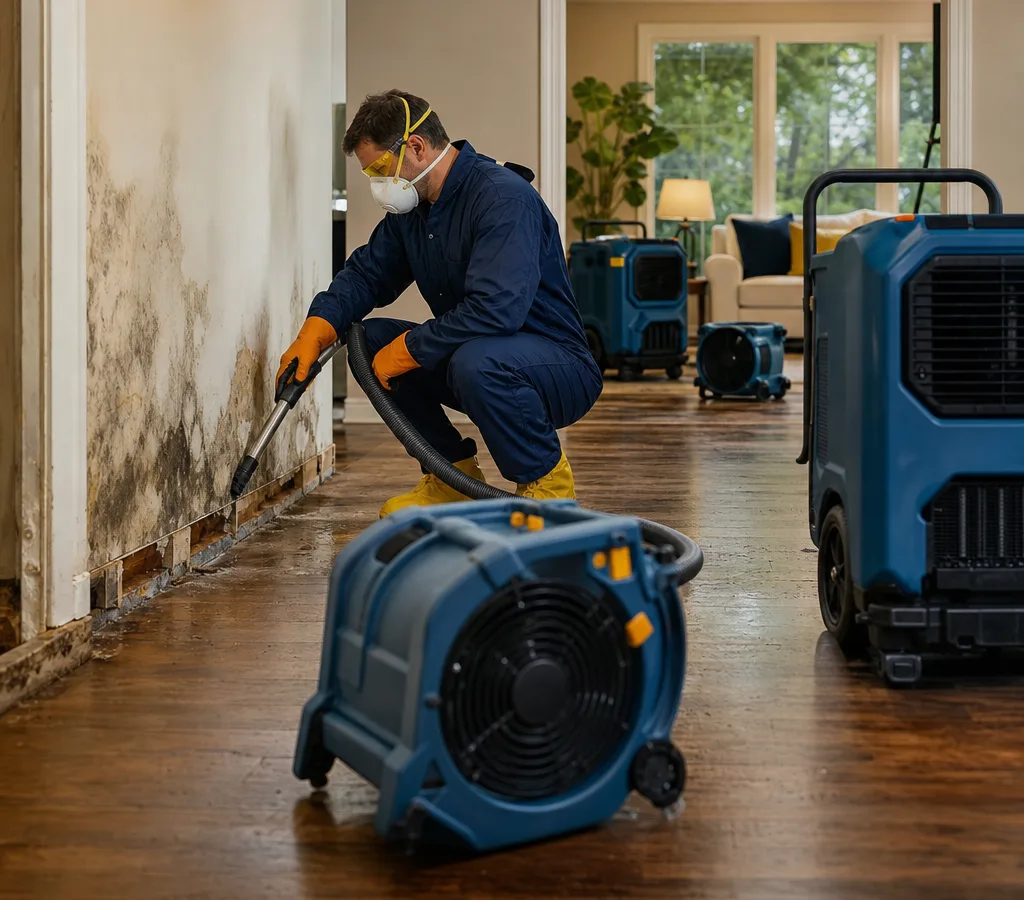
If you are searching for water damage restoration atlanta ga, you likely have a real problem right now: water where it should not be, and the damage spreading by the hour. Water can wick into drywall, soak subfloors, and creep under baseboards even when the visible puddle looks small. The goal of professional restoration is straightforward: stop the source, remove the water, dry the structure to an acceptable moisture level, and restore damaged materials in a controlled, well-documented way.
Fire Damage Restoration Atlanta provides water damage restoration in Atlanta for residential and commercial properties. We focus on practical next steps, clear communication, and a plan that fits the condition of your home or building, whether you are dealing with a burst supply line, an overflowing fixture, storm-related intrusion, or an appliance leak.
Atlanta's mix of older plaster and lath homes, mid-century construction, and newer condos means water behaves differently depending on how the building was built. In areas with high-rise and multi-unit living, like Buckhead, water can travel between units and affect neighbors fast, so early documentation and containment matter. In older neighborhoods like Virginia-Highland, original materials and layered renovations can hide moisture in wall cavities and under finished flooring. Wherever you are, the fundamentals do not change: quick action, proper drying, and verification before repairs.
Extraction, dehumidification, and air movement sized to the loss. Drying is monitored with moisture readings so materials are not closed up wet.
Wet drywall, insulated exterior walls, tile underlayment, and subfloors often hold moisture after the surface looks dry. We check likely migration paths and document conditions.
We isolate affected areas when needed, protect floors and contents during work, and set equipment to reduce secondary damage while the structure dries.
Clean water differs from gray water and sewage. The category affects what can be cleaned, what must be removed, and what safety steps are required.
Drying is only part of the job. We outline what needs to be removed, what can be saved, and what repairs follow so you can make decisions with real information.
Photos, moisture logs, and a written scope help keep the process organized, especially in multi-room or multi-unit losses.
A good restoration plan changes based on the source of water, the materials affected, and how long moisture has been present. In practice, most projects include several core phases.
First, we help you stabilize the situation: shut off water when possible, identify safety concerns, and assess whether the event is clean water or contaminated. That decision drives everything from personal protective equipment to what materials can be dried versus removed.
Next comes extraction and water removal. Even when water is already “gone” from the surface, saturated carpet pad, engineered wood, and drywall can hold a lot of moisture. We then set up structural drying: commercial dehumidifiers, air movers, and targeted drying methods for cavities and subfloors when needed.
During drying we verify progress with moisture readings and adjust the equipment plan. This matters because drying too slowly can lead to odor issues and microbial growth, while drying too aggressively in the wrong setup can cause warping in certain materials.
Finally, we move into restoration planning and repairs. That can include removing unsalvageable drywall, baseboards, insulation, flooring, or cabinetry components, then preparing the space for rebuild. If you are also handling recovery from another type of property loss, our team's background with Fire Damage Restoration helps us keep the job organized around safety, documentation, and a clear scope.
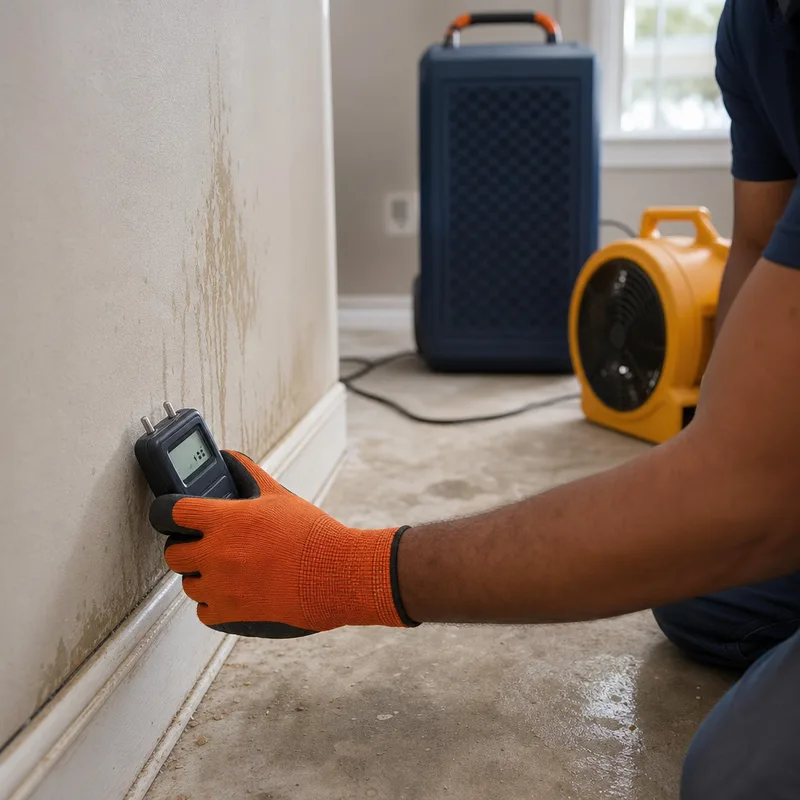
We inspect the affected areas, identify likely migration paths (behind baseboards, under flooring, inside wall cavities), and document starting conditions with photos and moisture readings.
If the source is active, we help you stabilize it and identify any immediate safety issues. For contaminated water events, we set containment and handle materials with appropriate precautions.
We remove standing water and, when required, pull affected carpet pad, wet drywall, or damaged insulation so the remaining structure can dry effectively.
We place air movers and dehumidifiers based on the room volume, material type, and humidity conditions. Equipment is positioned to move air across wet surfaces and pull moisture from the air.
Drying plans change as conditions change. We track moisture levels and humidity, then adjust equipment or drying strategy until target materials are dry enough for repair.
We outline what comes next, including cleaning, odor control if needed, and the repair scope so the property can return to normal use.
Water damage restoration in Atlanta typically ranges from about $1,200 to $6,000+ for common residential losses, with small, contained incidents sometimes lower and large multi-room or contaminated-water projects higher. A single-room clean-water drying job is often in the $1,200 to $2,800 range, while larger losses that involve demolition, heavy drying, and rebuild coordination can run $6,000 to $15,000+.
Your final price depends on the water category (clean vs. contaminated), how far water traveled, how long materials stayed wet, what needs to be removed, access (condos and multi-level homes), and the amount of drying equipment and monitoring required. The exact cost is confirmed after an on-site inspection and a written scope.
📞 Atlanta • 24/7 ResponseAtlanta water losses need drying decisions based on moisture readings, water category, and affected materials—not surface appearance alone.
“We had water under the flooring and thought it was just a small leak. The moisture readings showed it had spread farther than we could see. The drying setup was organized, and the updates made it easy to understand what was happening each day.”
“They documented everything clearly and kept the work area contained. The equipment was loud but they explained the timeline and what the numbers needed to be before repairs could start.”
Water category and electrical conditions shape the first safety decisions. A sanitary supply-line leak requires a different cleanup plan than gray water or sewage, and standing water near power must be approached cautiously.
Photos, moisture readings, and a written scope provide organized information for owners and insurers, including multi-unit situations involving more than one area.
Fans alone cannot confirm whether moisture remains behind surfaces. Materials should be verified before repairs begin or wet cavities are closed.
If it is safe, stop the source, keep people away from standing water near electrical hazards, and move small valuables away from wet floors. Avoid spreading humidity through the building.
Start the same day whenever possible, because water can wick into drywall, trim, and subfloors quickly even after you mop up. In Atlanta homes with layered flooring (tile over underlayment, engineered wood, or floating floors), moisture can stay trapped and cause swelling or odors if drying is delayed.
Sometimes, yes, but only if moisture readings and the water category support it. Clean-water losses caught early may be dried in place with the right equipment and monitoring, while swollen drywall, contaminated water events, or insulation that stays wet often require removal so the structure can dry properly.
Clean water (Category 1) starts from a sanitary source like a supply line, while gray water (Category 2) and sewage (Category 3) contain contaminants that can make porous materials unsafe to keep. The category affects containment, cleaning, and what materials must be discarded, which is why a toilet overflow is treated differently than a burst pipe.
Most structural drying takes about 3 to 5 days, but it can be shorter for small, caught-early leaks and longer when water reaches multiple rooms, wall cavities, or thick materials like subfloors. The timeline should be based on moisture verification, not the calendar.
Yes. We document conditions with photos, moisture readings, and a written scope so you have organized information for your claim. This is especially helpful for condo and multi-unit situations where damage can involve more than one area or owner.
If it is safe, stop the water source, shut off electricity to affected areas when there is standing water, and move small valuables away from wet floors. Avoid running HVAC in a way that spreads humidity through the building, and do not close up wet areas with fans alone if you cannot confirm what is dry behind surfaces.
Tell us what happened and what areas are affected. We will walk you through immediate next steps, inspect the damage, and provide a clear drying and restoration plan for your Atlanta property.