Moisture verification, not guesswork
Drying is tracked with moisture meters and documented readings so you know when materials are actually dry enough for repairs.
Serving Atlanta, Georgia & surrounding areas
24/7 Emergency Response
When water and fire hit the same property, damage spreads fast. Get a clear plan for cleanup, drying, smoke removal, and repairs so you can protect the building and get back to normal sooner.
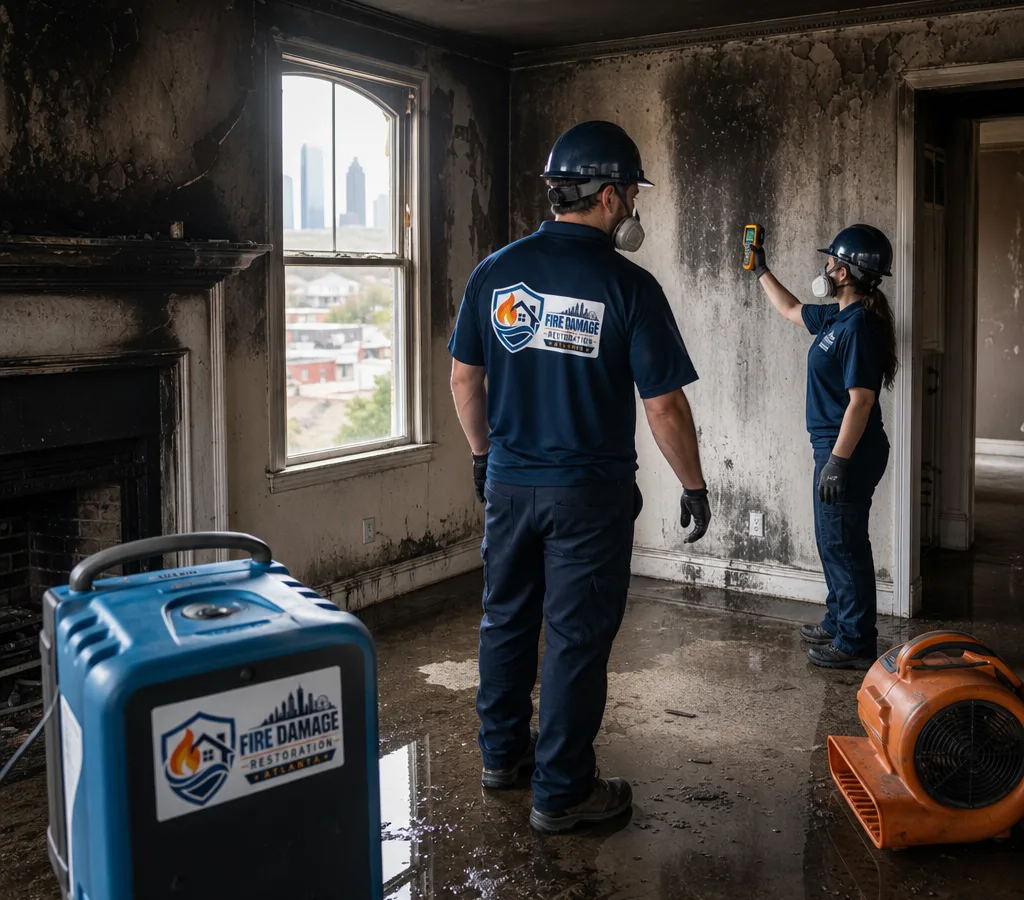
Atlanta water fire damage often comes as a chain reaction: a kitchen fire gets knocked down, sprinklers or hoses soak flooring and drywall, and the property is left with smoke residue plus wet materials. The longer porous materials stay damp, the more you risk swelling, warping, corrosion, and microbial growth.
Fire Damage Restoration Atlanta helps stabilize homes and commercial spaces across Atlanta, GA with coordinated mitigation. That means making the site safe, removing damaged materials where needed, drying what can be saved, addressing smoke odor and soot, and setting the scope for repairs. If you are still figuring out what can be restored versus what must be replaced, that is exactly what a proper inspection is for.
If you are comparing companies, start with one simple requirement: you should get a written scope that separates emergency mitigation from rebuild work, with clear photo documentation. That paperwork protects you, especially when an insurance claim is involved.
Combined losses need a coordinated approach because water and smoke affect materials differently.
Typical Atlanta water fire damage restoration scope may include:
In Atlanta's humid conditions, drying and odor work often overlap. Materials can feel dry on the surface while holding moisture deeper in the assembly, so moisture readings and daily monitoring matter.
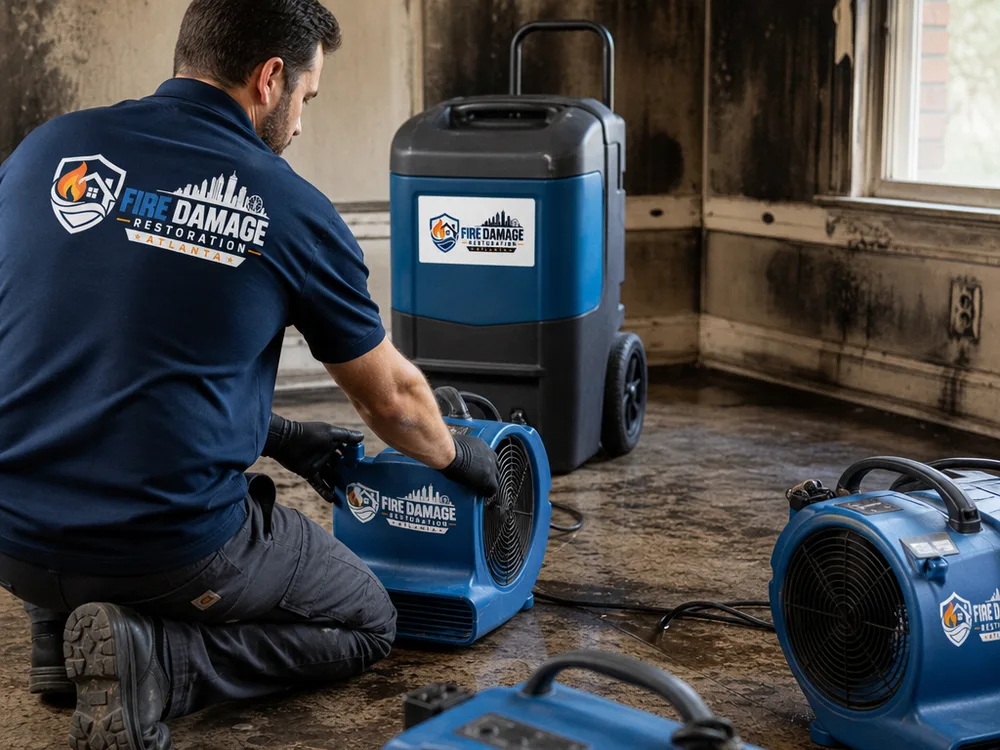
Drying is tracked with moisture meters and documented readings so you know when materials are actually dry enough for repairs.
Soot behaves differently on painted drywall, brick, metal, and finished wood. The method should change with the material to avoid permanent staining or etching.
Plastic barriers and negative air help keep soot and fine particulates from spreading into clean rooms and HVAC pathways.
Photo documentation and itemized notes make it easier to communicate what happened, what was removed, and what is being restored.
For businesses, the plan should prioritize safe access and staged work so critical areas can reopen sooner when possible.
We identify affected rooms, likely paths of water migration, and where soot settled. If power, HVAC, or structural components appear compromised, we plan work around safe shutoffs and controlled access.
Extraction starts first, then drying equipment is sized to the space. We separate salvageable materials from unsalvageable ones so moisture and contamination do not keep spreading.
We choose cleaning methods based on the type of residue and the surface. Odor control comes after source removal, not as a cover-up.
Drying progress is checked with moisture readings, and the scope is documented with notes and photos so decisions about rebuild are based on conditions, not assumptions.
Once the structure is clean and dry, we outline the next repair steps—drywall, trim, flooring, paint, and fixtures—so you can move forward with a clear sequence and realistic timeline.
Most Atlanta water fire damage restoration projects in Atlanta typically range from about $2,500 to $25,000+, depending on how many rooms are affected and whether the fire involved heavy soot, wet insulation, or contaminated water. A smaller single-room loss with light smoke and limited water may be near the low end, while multi-room damage with demolition, odor treatment, and significant drying runs higher.
Final pricing changes with drying time and equipment needs, how much material must be removed, access to the affected areas, and the level of smoke residue, including HVAC involvement. The exact cost is confirmed after an onsite inspection and a written scope.
Request Emergency Service“We had smoke in the hallway and water in the living room after the fire department finished. The crew explained what could be saved, set up drying equipment the same day, and kept us updated with photos and moisture readings.”
“The odor was the biggest worry for us. They removed the damaged materials first and then did the deodorization. It made a noticeable difference once the structure was actually clean and dry.”
Start by keeping people out of unsafe areas, shutting off utilities only if it is safe to do so, and limiting airflow that can spread soot—for example, avoid running the HVAC until it is inspected. Then get an inspection so drying and soot cleanup can begin before moisture and smoke residues cause more permanent damage.
Drying commonly takes 3 to 5 days, but it can take longer if insulation is saturated, water reached subfloors, or humidity stays high. The correct endpoint is based on moisture readings in affected materials, not how the surface feels.
Sometimes, yes, but only when moisture and residue did not penetrate the assembly and readings confirm the cavity is dry. If insulation is wet, odor is trapped, or soot is embedded, selective removal is often required so cleaning and drying can actually reach the source.
Usually not. Smoke odor tends to persist unless the source residue is removed and the affected materials are properly cleaned, sealed when appropriate, and deodorized. A good plan starts with identifying where soot and odor molecules settled, including porous materials and sometimes HVAC components.
Yes, we provide a written scope and photo documentation that helps support the claim and explains what was done during mitigation. Insurance requirements vary by policy, but clear documentation of affected areas, drying steps, and removed materials is consistently useful.
It depends on where the damage is and what work is needed. Light, contained damage may allow partial occupancy, but heavy soot, demolition, or strong deodorization methods can require temporary relocation or after-hours scheduling. An onsite assessment determines what areas can remain in use safely.
We serve the Atlanta area, including neighborhoods such as Buckhead, Midtown, Old Fourth Ward, and Virginia-Highland. Older homes and mixed-use buildings in these areas can have layered finishes and shared walls that affect containment, odor migration, and how repairs are sequenced.
Choose a team that can explain the drying strategy, show how they will contain soot, and provide a written scope that separates mitigation from repairs. Ask what readings they will use to verify dryness, what deodorization method fits your situation, and how they document materials removed versus restored.
If you are dealing with water plus smoke damage, the next best step is a fast inspection and a written scope so mitigation starts correctly and repairs do not get delayed.
Tell us what happened and what areas are affected. Fire Damage Restoration Atlanta will walk you through cleanup, drying, smoke removal, and the repair sequence so you can make decisions with facts, not guesswork.