Moisture mapping and a written scope
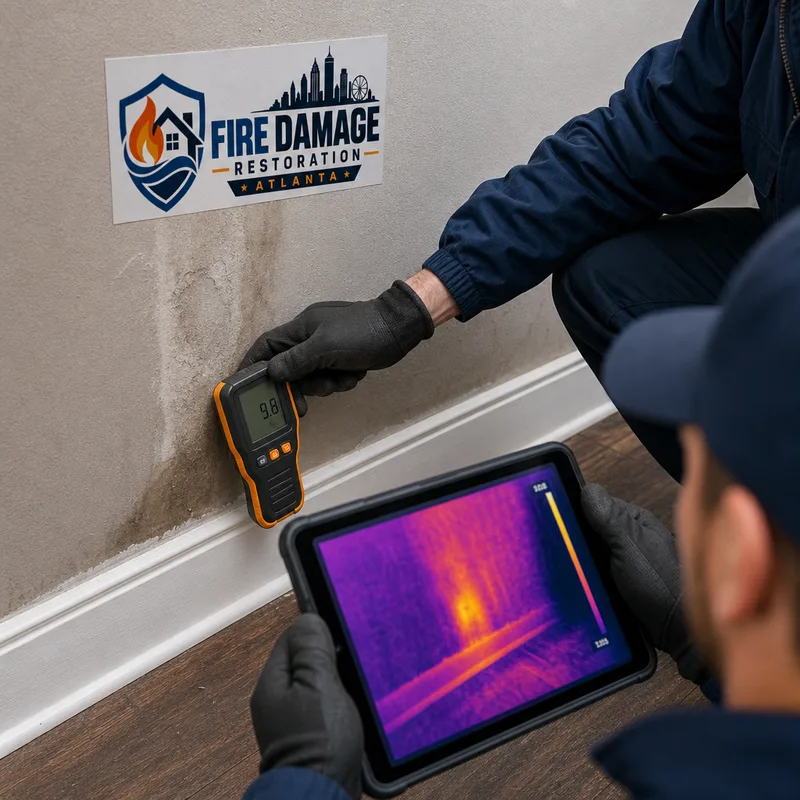
We use moisture meters and thermal imaging as appropriate to identify what is wet, where it is traveling, and what needs extraction, drying, or removal.
Serving Atlanta, Georgia & surrounding areas
24/7 Emergency Response
When water gets into floors, drywall, or cabinets, time matters. Our crew responds fast, documents what happened, and dries your property with professional equipment so you can move forward with a clear plan.
If you searched for water damage cleanup atlanta ga, you likely have water where it should not be: a supply line leak, an overflowing tub, a water heater failure, or storm water that found a low point. The first goal is to stop the spread. The second is to dry the structure correctly so materials do not stay wet behind the scenes.
Fire Damage Restoration Atlanta handles water damage cleanup across Atlanta with a trade-first approach: locate the wet materials, extract standing water, set a drying plan based on measurements—not guesses—and monitor until readings are back to a dry standard. We work on single-room losses as well as larger events affecting multiple levels.
Atlanta has a mix of older and newer construction, plus many multi-story homes and condos. Water moves fast through stairwells, wall cavities, and shared plumbing chases. In areas like Buckhead and Midtown, even a small leak can affect lower units or shared spaces. In Virginia-Highland and other neighborhoods with older housing stock, layered assemblies such as plaster, lath, and original hardwoods can hold moisture in ways that take longer to dry. The sooner drying starts, the less material typically needs to be removed.
We use moisture meters and thermal imaging as appropriate to identify what is wet, where it is traveling, and what needs extraction, drying, or removal.
If drywall, baseboards, insulation, or flooring cannot be dried in place, we remove only what is necessary to expose cavities and prevent hidden moisture.
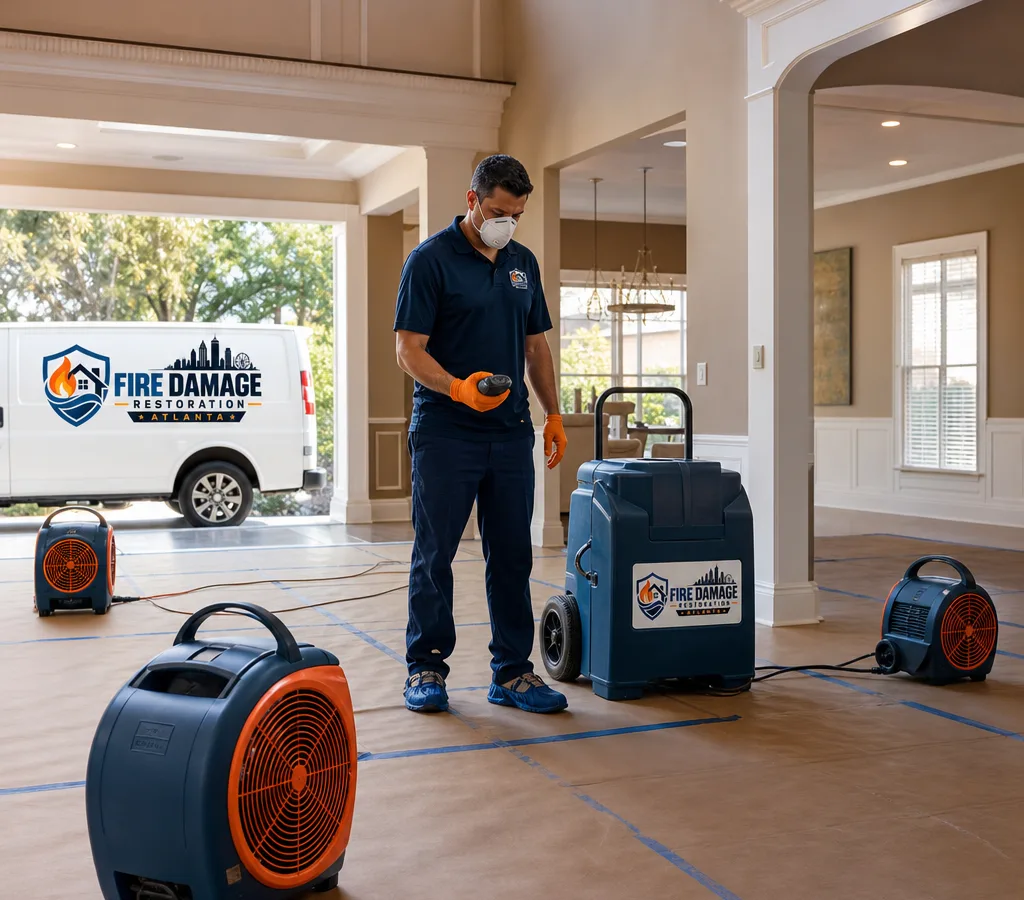
Truck-mounted or portable extraction, air movers, and dehumidifiers are staged to match the affected materials and the size of the loss.
We apply appropriate cleaning and antimicrobial treatments to affected surfaces when conditions call for it, especially after dirty water exposure.
You will know what is happening today, what happens next, and what items you should not use until they are dry or replaced.
Photos, moisture readings, and daily notes help support insurance conversations and keep decisions based on evidence.
Water damage is rarely just the puddle you can see. It wicks into baseboards, travels under floating floors, and collects at low points. In multi-level properties, gravity does the rest.
A few Atlanta-specific situations we commonly plan for:
If you have shut off the water source and it is safe to do so, move small items out of the wet area and avoid running HVAC in a way that blows humid air through the home. Leave wet carpet pad, drywall, and insulation decisions to a measured inspection; removing the wrong materials can create extra cost without solving the moisture problem.
We confirm the water source is controlled and check for safety issues like wet electrical areas, unstable ceilings, or slipping hazards before work begins.
We identify affected rooms and materials, then determine whether the water is clean, gray, or potentially contaminated. This guides cleaning methods and what can be saved.
Extraction is the fastest way to reduce damage. We remove water from floors, carpet, and low points before setting drying equipment.
When materials cannot be dried to an acceptable standard, we perform controlled removal to open cavities and prevent trapped moisture.
Air movers and dehumidifiers are positioned based on measurements, room volume, and the materials involved. We track progress with moisture readings.
After drying, we clean affected surfaces and address odors as needed. You receive documentation and next-step guidance for repairs and reinstallation.
Water damage cleanup in Atlanta typically ranges from about $900 to $6,500+, depending on how much water is present and how far it traveled into building materials. A small, clean-water leak limited to one room often falls near the lower end, while multi-room losses, ceiling drops, or contaminated water situations cost more due to demolition, cleaning steps, and longer drying times.
Final pricing is driven by the affected square footage, water category, the need to remove drywall or flooring, access such as tight crawlspaces or multi-level units, and how many days equipment must run. The exact cost is confirmed after an on-site inspection and moisture mapping.
Request Emergency ServiceIf you are seeing staining, bubbling paint, warped flooring, or a musty odor, a same-day moisture inspection can prevent hidden damage from becoming a larger rebuild.
“We had a supply line leak that soaked the hardwood and the wall behind the cabinets. The crew explained what could be dried in place, what had to come out, and they tracked moisture readings until it was actually dry. The documentation made the insurance conversations easier.”
“After water came through the garage during a heavy rain, they extracted quickly and set up drying equipment the same day. The basement did not end up with lingering odor because they opened the wet areas and dried it the right way.”
You should start water damage cleanup as soon as the source is stopped and the area is safe, because moisture can spread behind baseboards, under flooring, and into drywall within hours. Early extraction and proper dehumidification usually reduce how much material needs to be removed and how long drying takes.
Sometimes they can be dried, but many wet wall assemblies need controlled removal to expose cavities and prevent trapped moisture. Drywall that is swollen, crumbling, or saturated near the bottom edge often cannot be saved, and insulation typically loses performance when wet and may need replacement.
Most drying jobs take about 3 to 5 days, but it depends on the materials such as hardwood, tile, or carpet, how much water was absorbed, and whether water reached wall cavities or subfloor. We monitor moisture readings during the drying period and adjust equipment to match conditions.
Clean water usually comes from a supply line or faucet, while contaminated water may come from a backup, ground intrusion, or unknown sources and requires stricter cleaning and disposal steps. The water category affects what materials can be kept, what must be removed, and what sanitation methods are appropriate.
Yes, we provide documentation such as photos, notes, and moisture readings that support what was wet, what work was required, and how drying progressed. Every policy is different, but clear documentation helps align the scope of work with the conditions found on site.
Yes, we work in condos and multi-unit properties, where leaks often affect ceilings, shared plumbing chases, and neighboring units. We focus on moisture mapping to define boundaries clearly, which helps property managers and owners coordinate access and next steps.
If it is safe, stop the water source, shut off power to any wet electrical areas, and move small valuables out of the affected area. Avoid running fans randomly if water may be contaminated, and do not cover wet areas with rugs or plastic, since that can trap moisture and slow drying.
Tell us what happened and which rooms are affected. We will schedule a moisture inspection, explain what can be saved, and provide a written scope for water damage cleanup in Atlanta.